DESIGN | VILLA NECCHI CAMPIGLIO
VILLA NECCHI CAMPIGLIO: A MILANESE DIALOGUE OF ARCHITECTURE AND ELEGANCE
Inside Piero Portaluppi’s 1930s Milanese masterpiece, where Rationalist architecture, Art Deco influences and remarkable art collections create a house that still feels vividly alive.
Words by Catherine De Orio
The first time I read about Villa Necchi Campiglio, I wasn’t in Milan. I was at my desk, deep in a Guadagnino rabbit hole at midnight, wondering why his interiors made me want to dismantle everything I knew and start again, more beautifully. There was something in the frames of I Am Love — the cool light, the travertine, the sense of a life composed rather than simply lived — that stayed with me. When I finally walked through the villa’s wrought-iron gates one quiet afternoon in early November, I wanted to see how that world felt beyond the screen.
Set within Milan’s aptly named Quadrilatero del Silenzio, the house seemed entirely removed from the city around it. Commissioned in the early 1930s for sisters Nedda and Gigina Necchi and Gigina’s husband, Angelo Campiglio. Their industrial wealth afforded them the opportunity to embrace a new kind of modern life, building a home as technologically ambitious as it was beautiful.
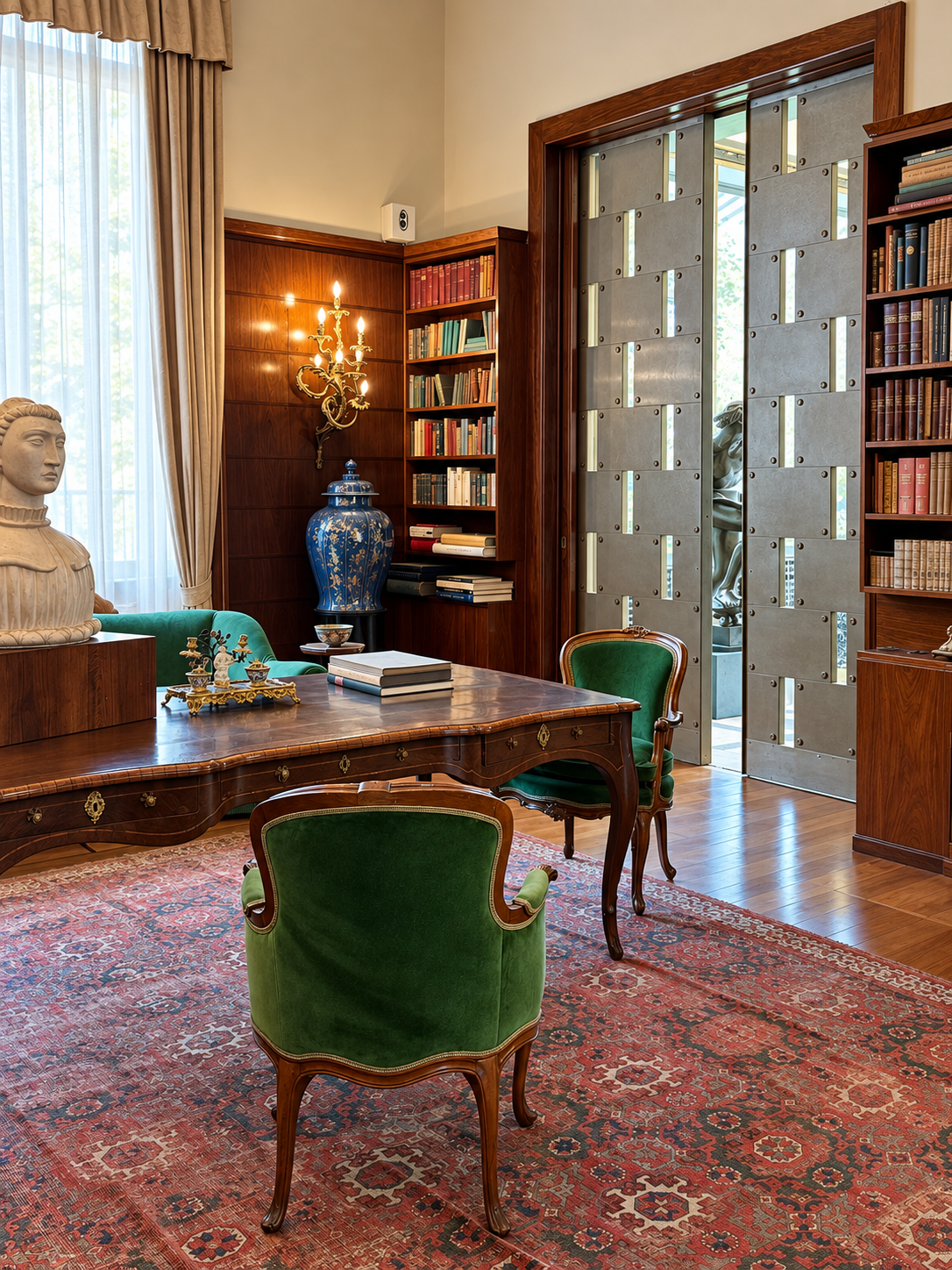
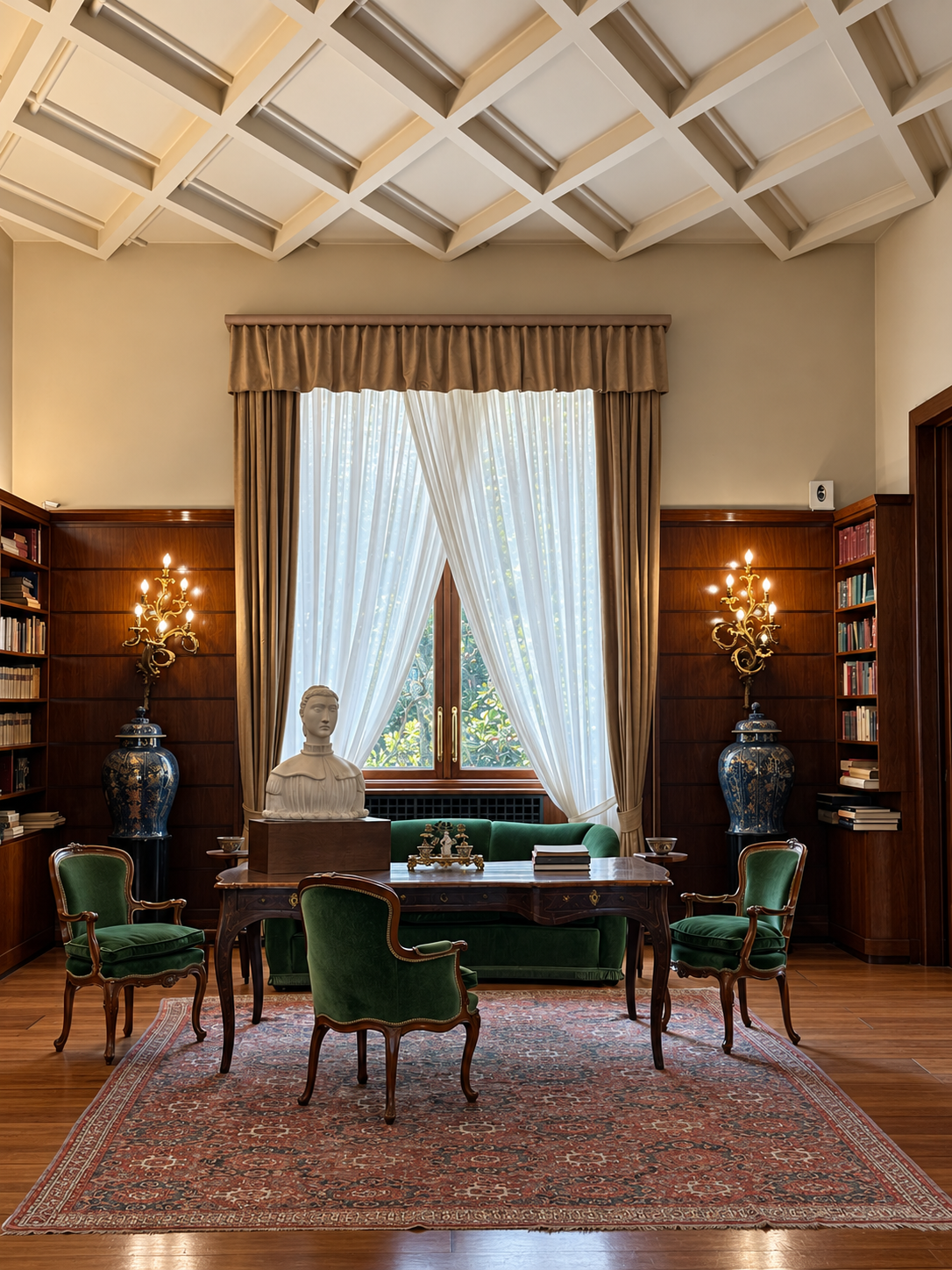
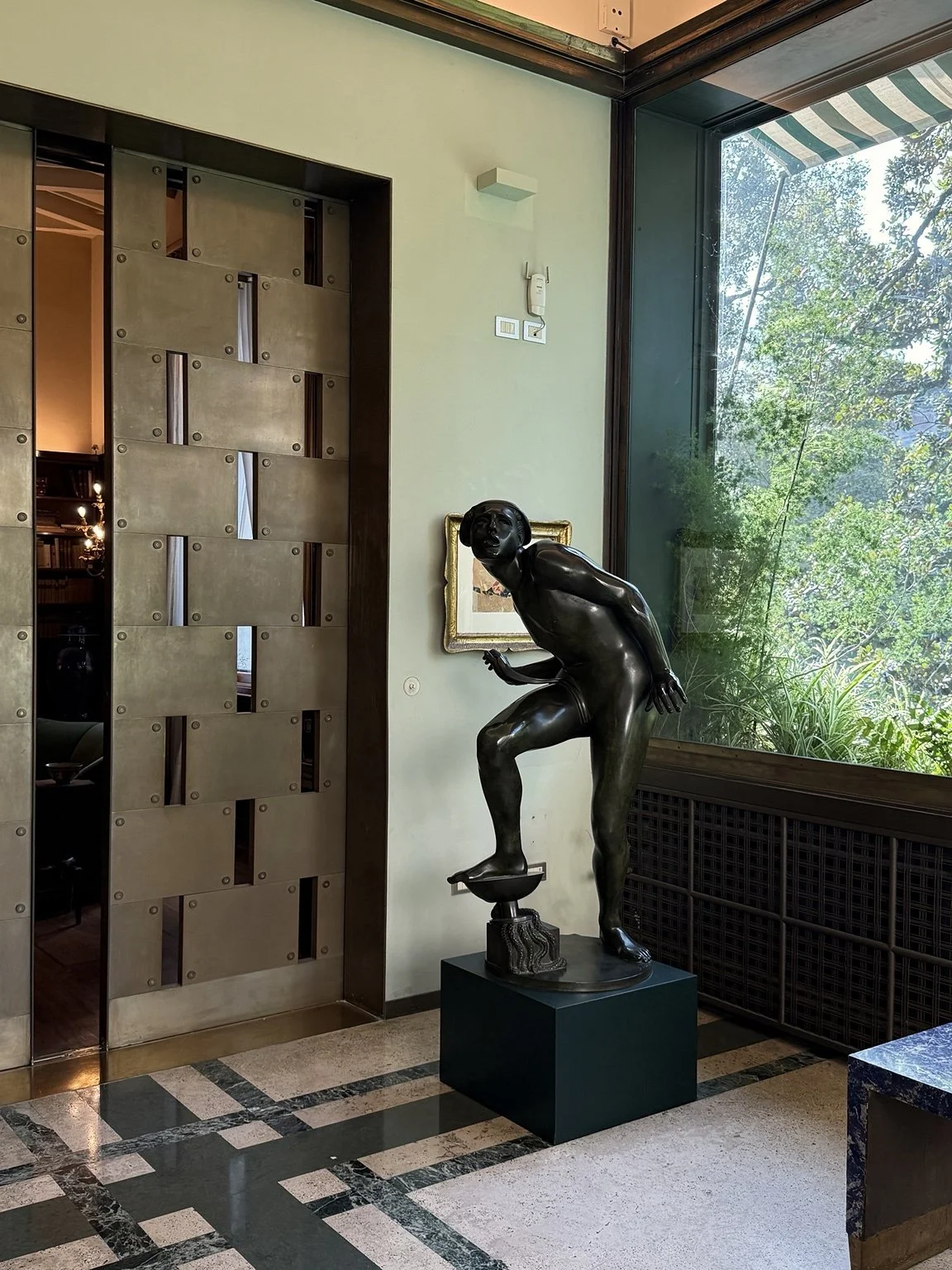
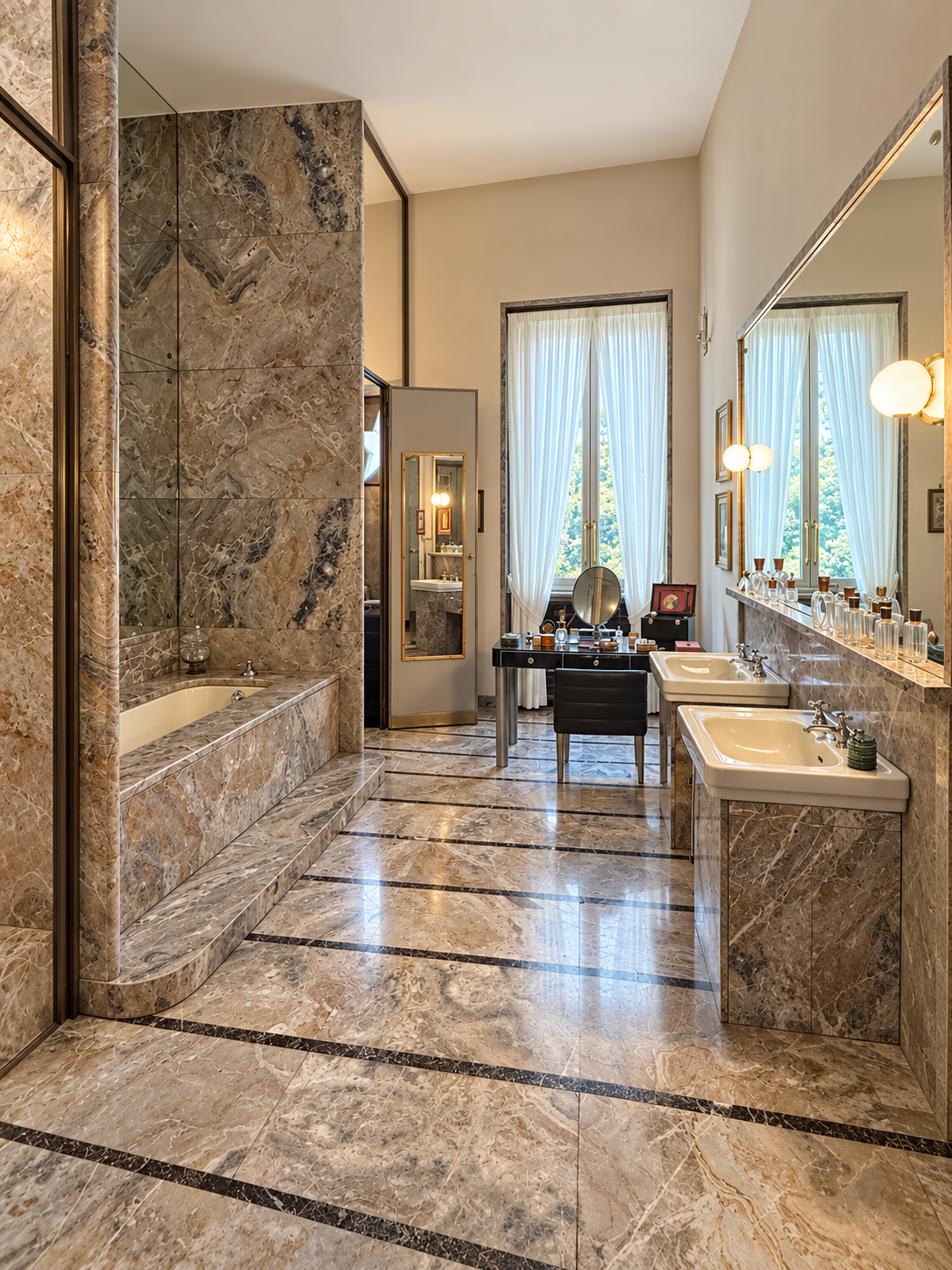
They entrusted its design to Piero Portaluppi, the Milanese architect whose clean geometries, sumptuous materials and restrained theatricality gave the villa a language all its own. Travertine and rosewood. Brass-framed thresholds. Light pouring through oversized windows. The pleasure of these rooms lies as much in their proportions and materials as in anything placed within them. Each room designed not just to be seen but to be felt.
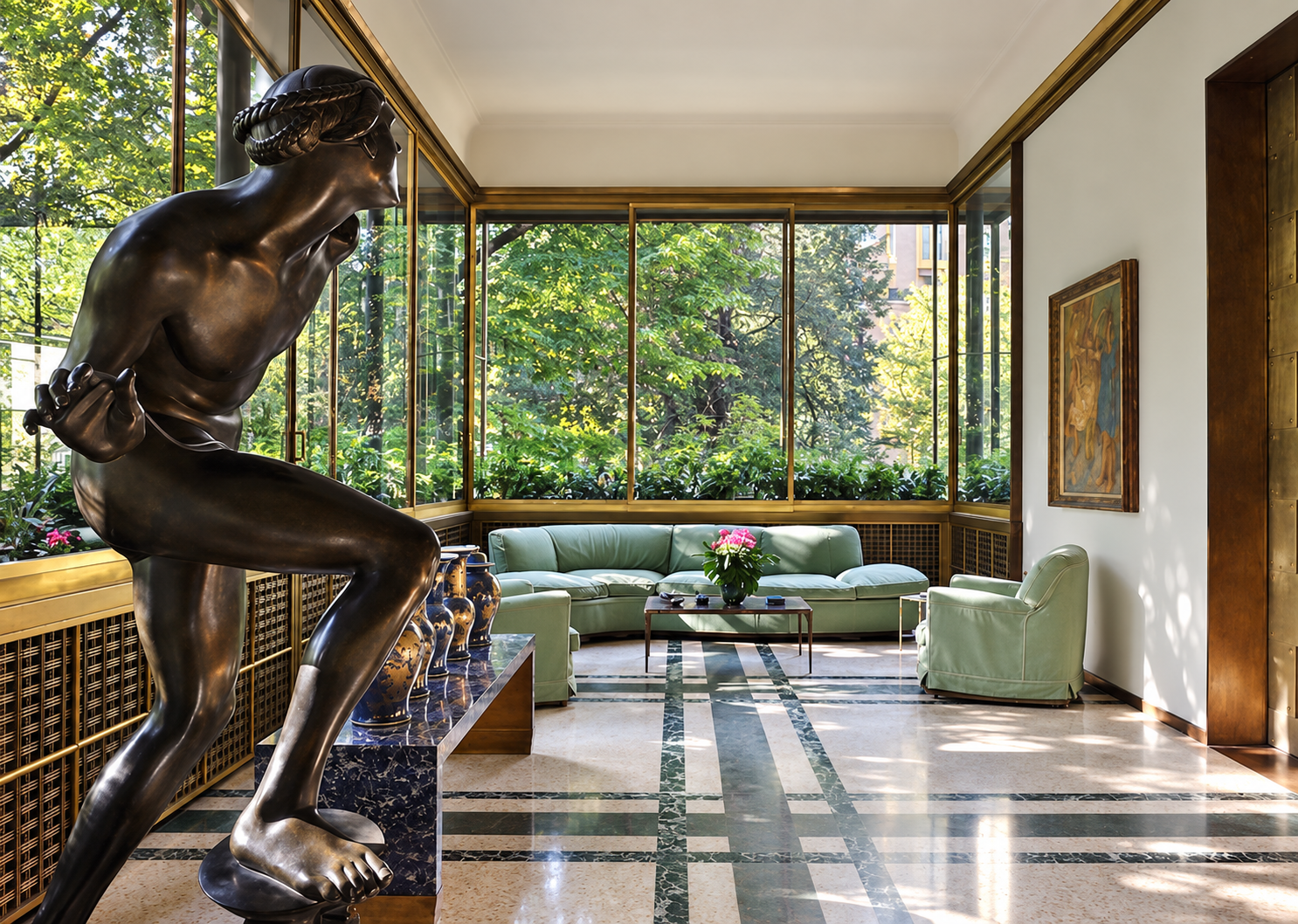
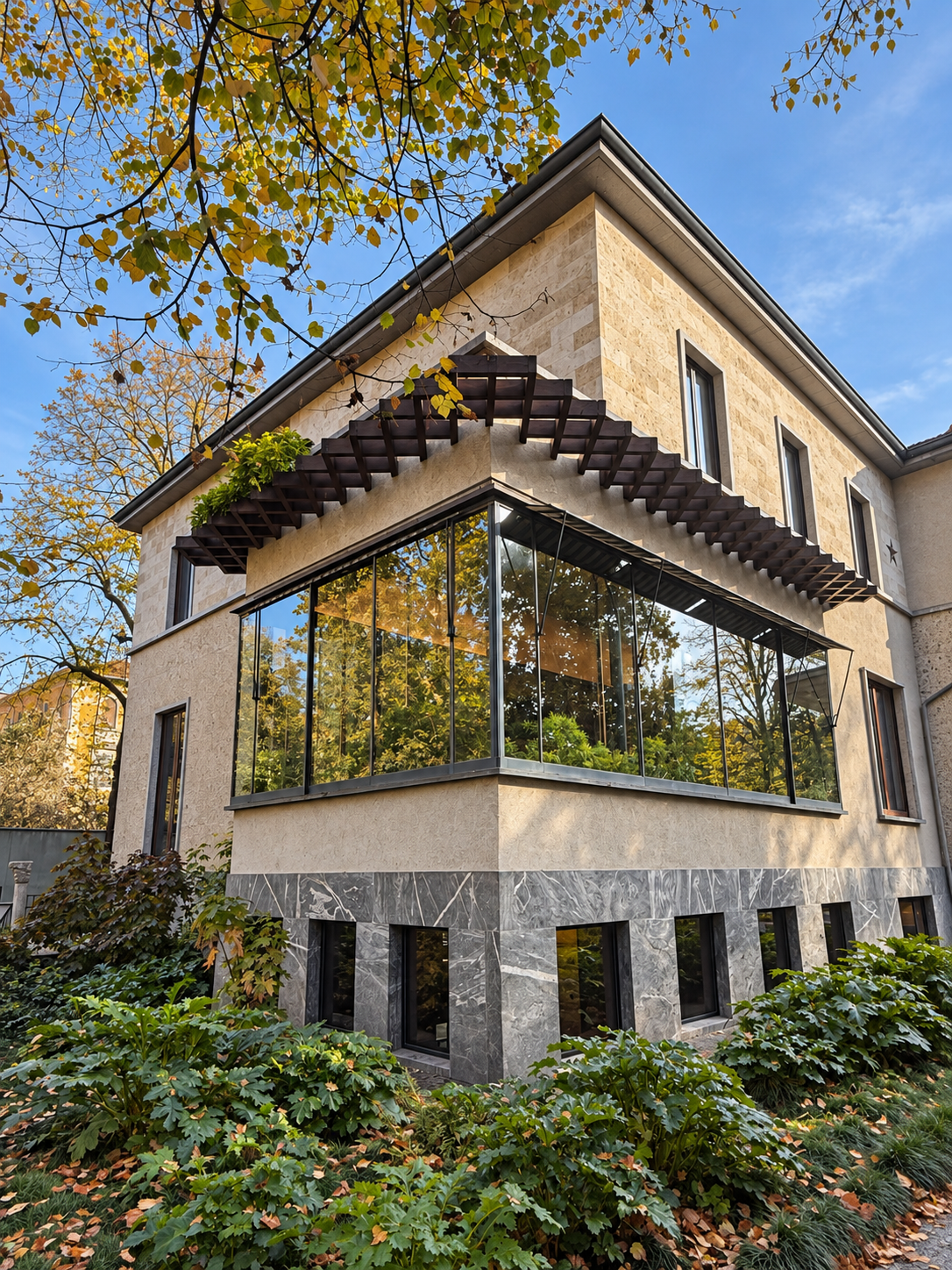
Portaluppi’s modern lines are enriched by Art Deco flourishes and influences from the Viennese Secession. The veranda, or winter garden, is the jewel of the villa. Its travertine and green marble floor reinforces the geometry of the house, while walls of glass draw the garden inward, framing its greenery as carefully as anything hanging on the walls. Filled with natural light, the room softens the rigor of Portaluppi’s design. Here, architecture and landscape seem to belong to one another.
I was struck by how revolutionary Villa Necchi must have felt when it was completed in 1935. Its heated swimming pool, among the earliest private pools in Milan, was joined by an elevator, intercoms, a dumbwaiter and even a screening room. These conveniences expressed a belief that innovation could transform the experience of daily life and that modernity itself could be luxurious. The family was making room for pleasure with considerable practical ingenuity — which I found that rather magnificent.
“These conveniences expressed a belief that innovation could transform the experience of daily life and that modernity itself could be luxurious.”
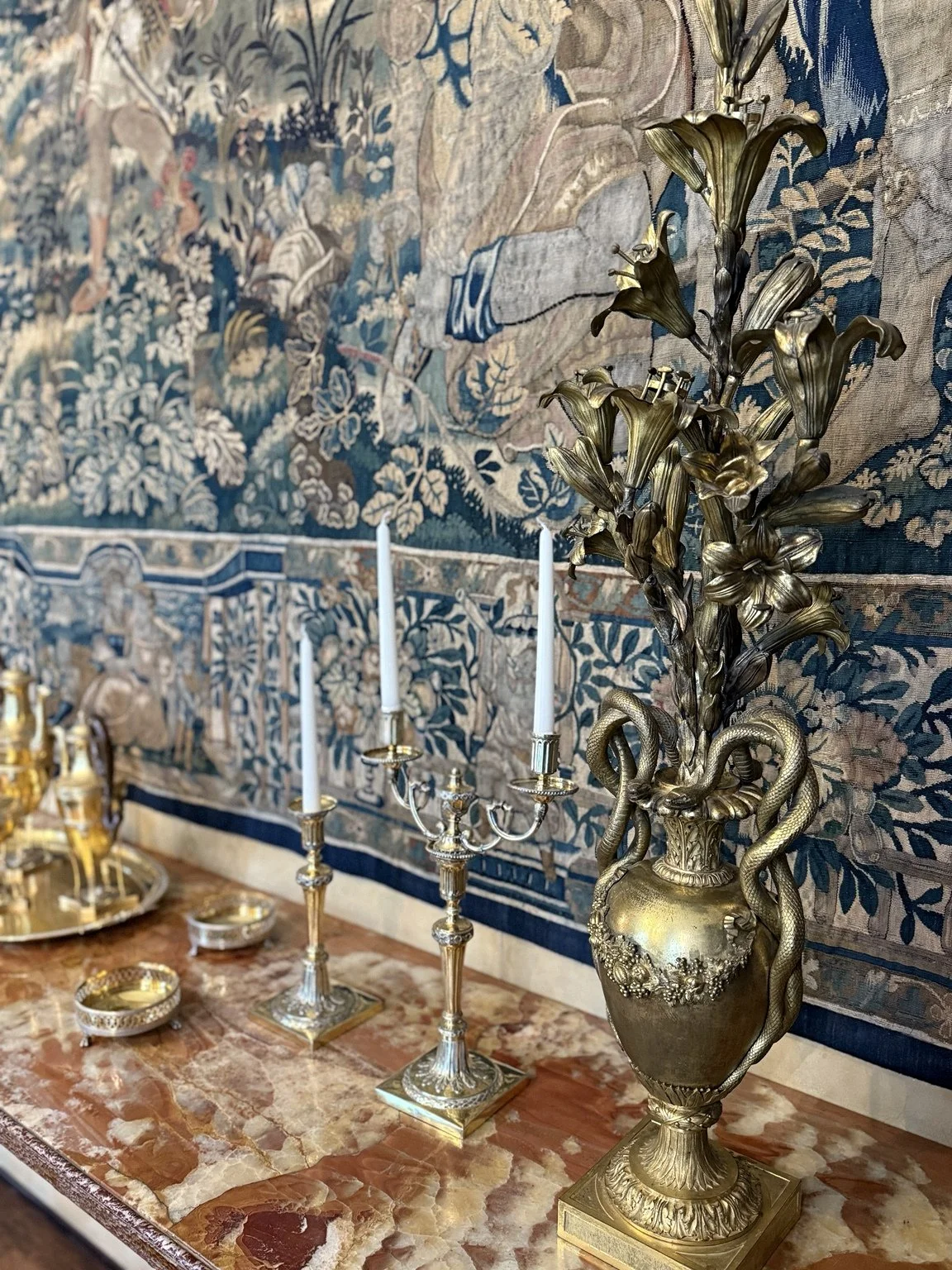
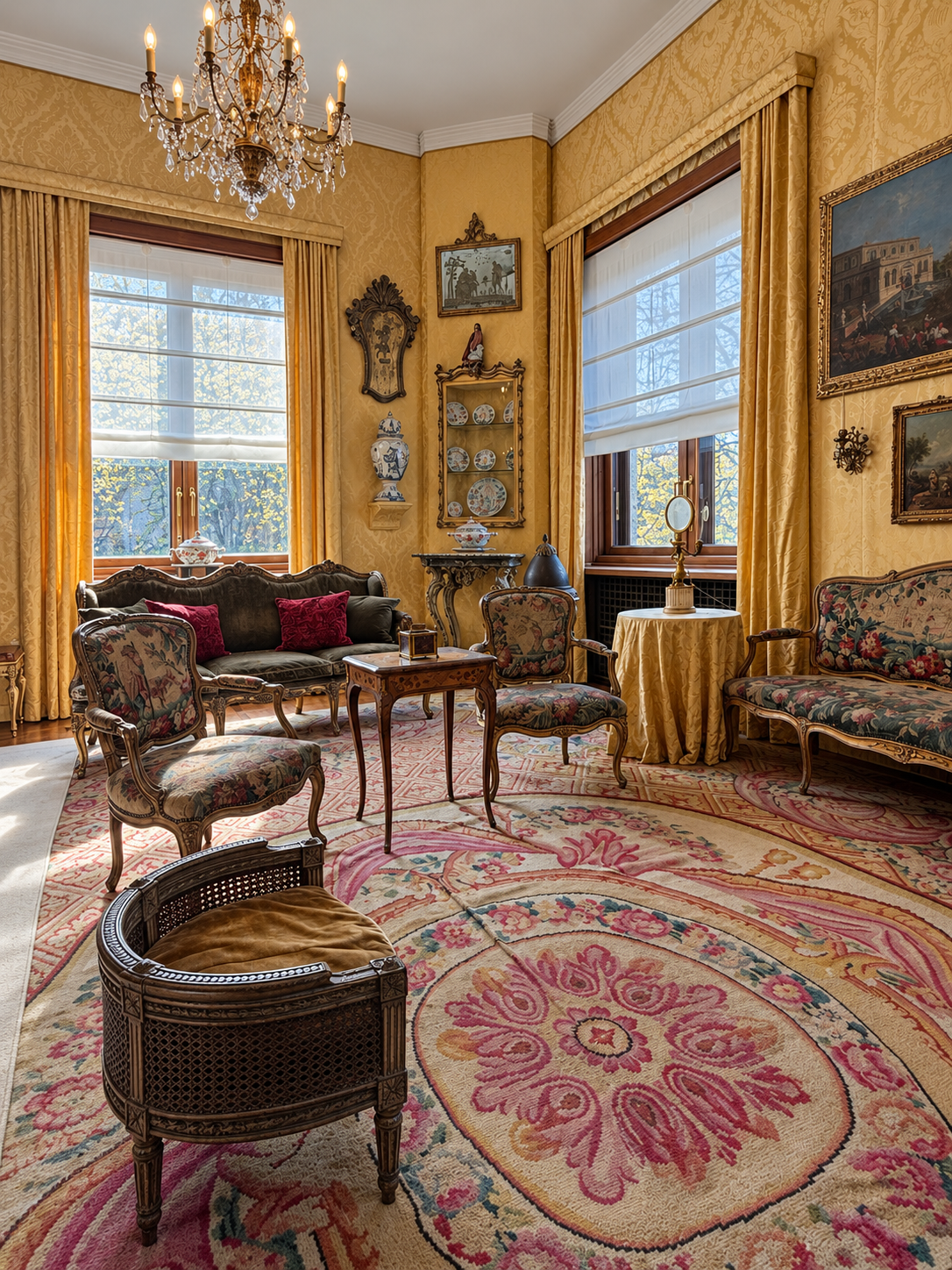
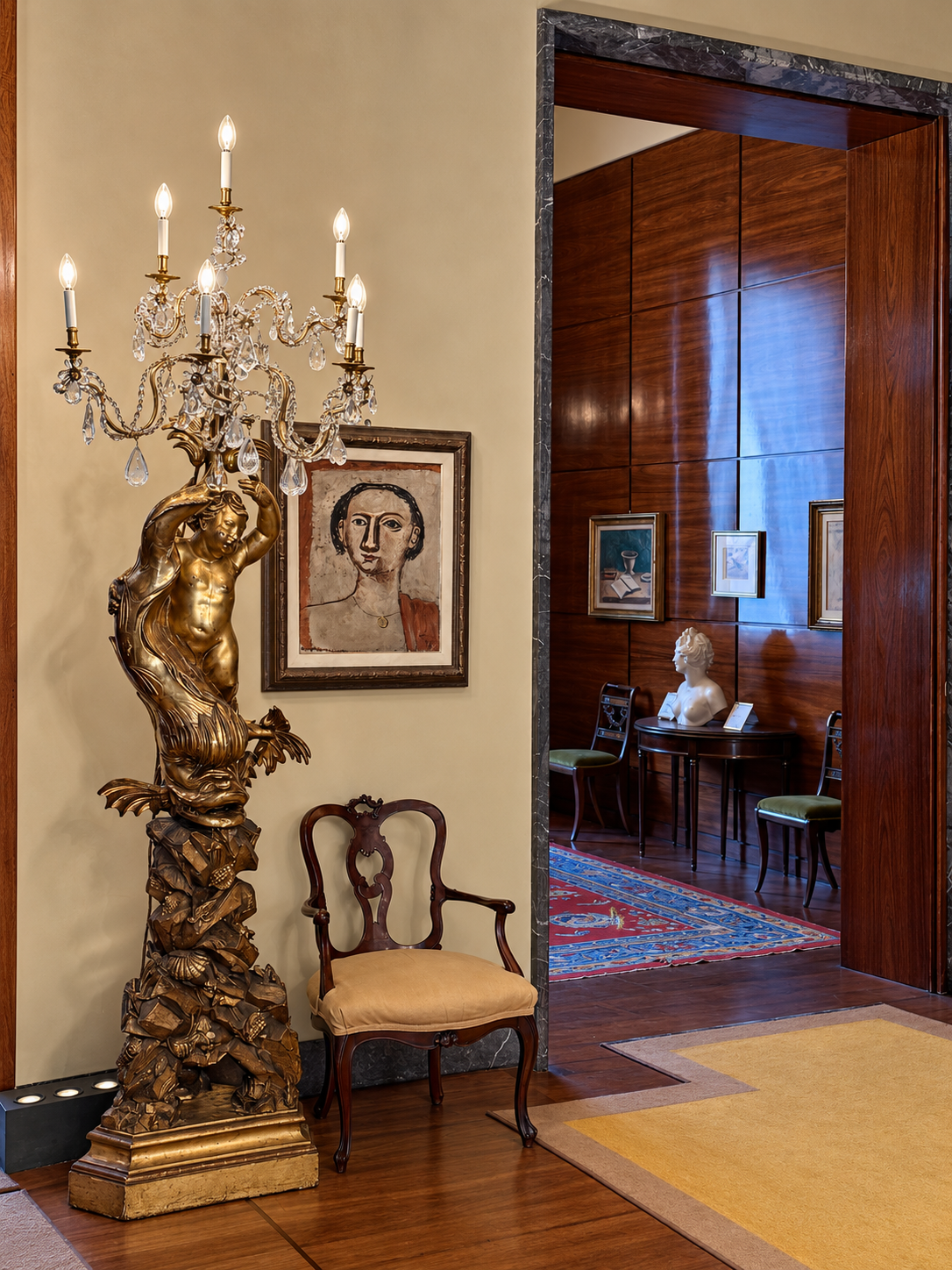
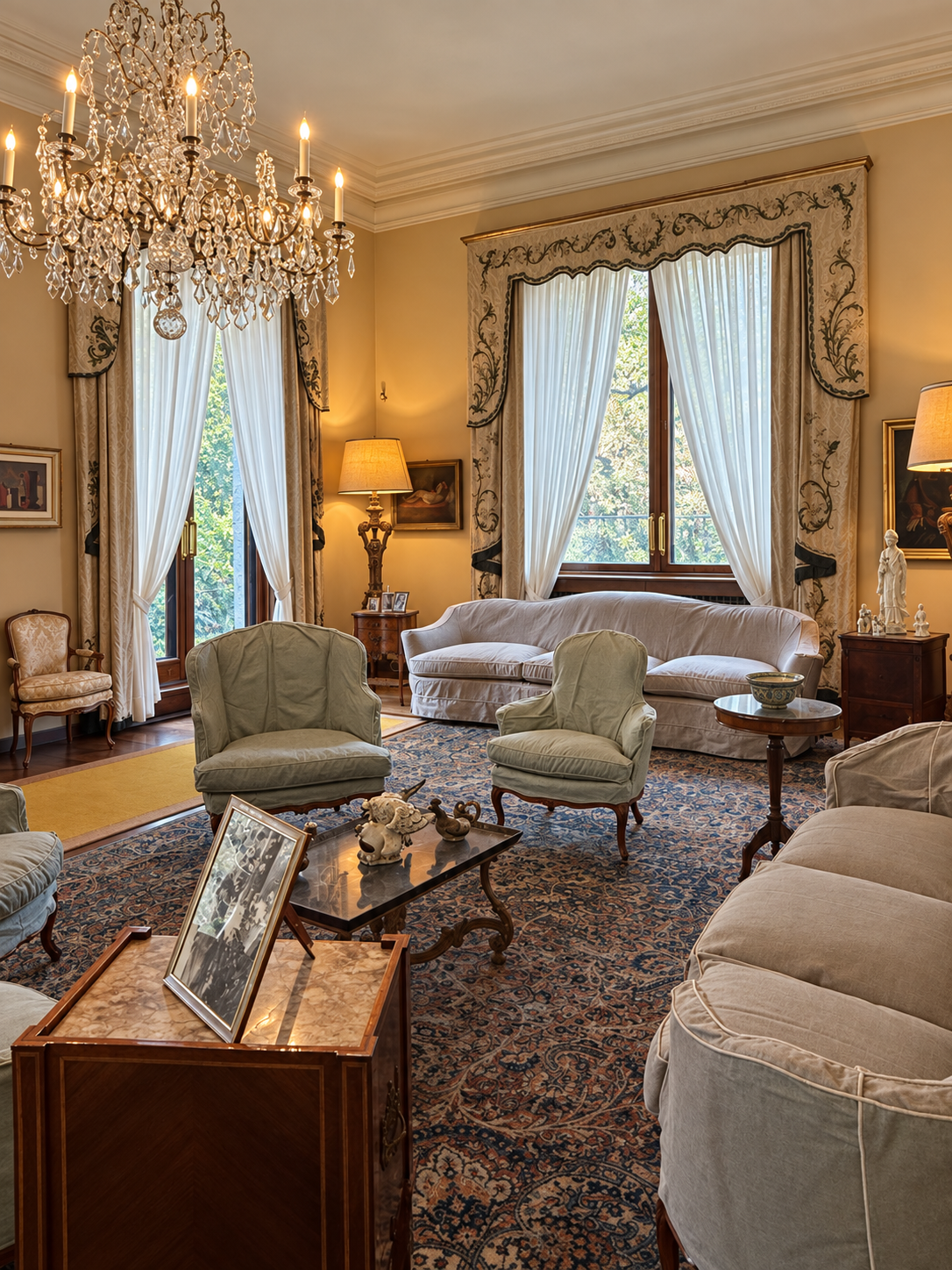
Yet their tastes continued to evolve. Beginning in 1938, they invited architect Tomaso Buzzi to temper some of Portaluppi’s interiors with a softer, more classical sensibility. Antique textiles, tapestries and 18th-century furnishings began to coexist with the original architectural precision.
Then war interrupted life at the villa. The family fled Milan, and the house became the residence of Fascist official Alessandro Pavolini. They eventually returned and continued to shape it around their lives. Decades later, restoration brought many of Portaluppi’s original details back into view while retaining elements of Buzzi’s interventions. Different eras remain visible, allowing the house to reveal something of the changing tastes of those who inhabited it.
This, to me, is one of Villa Necchi’s most instructive qualities. I think about it when I’m setting my own table or choosing what hangs on a wall. The rooms that move us most are rarely the ones that match perfectly. They’re the ones that accumulate meaning over time. Here, the classical furnishings give Portaluppi’s precision another register; the architecture, in turn, makes those older pieces feel newly interesting.
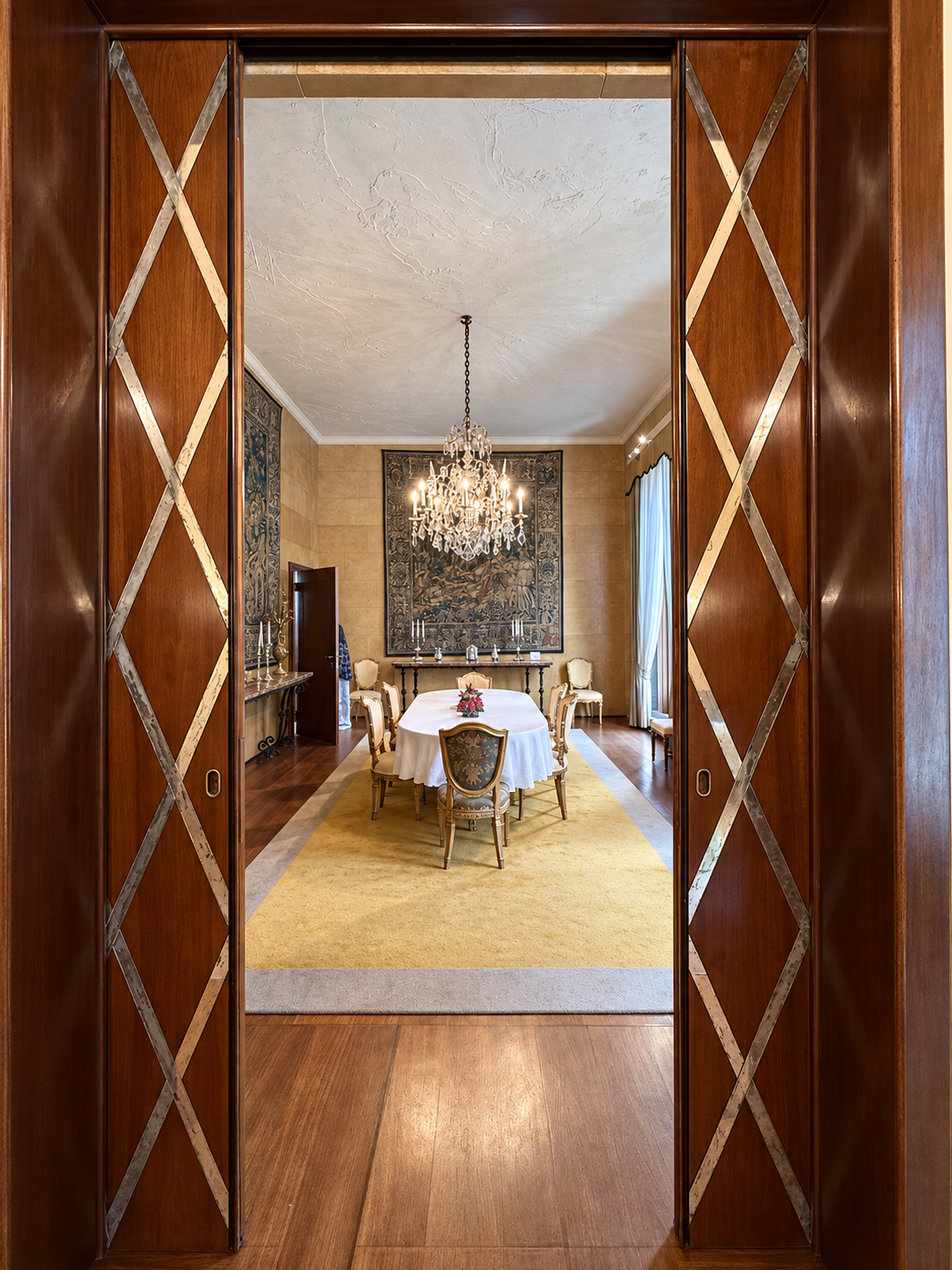
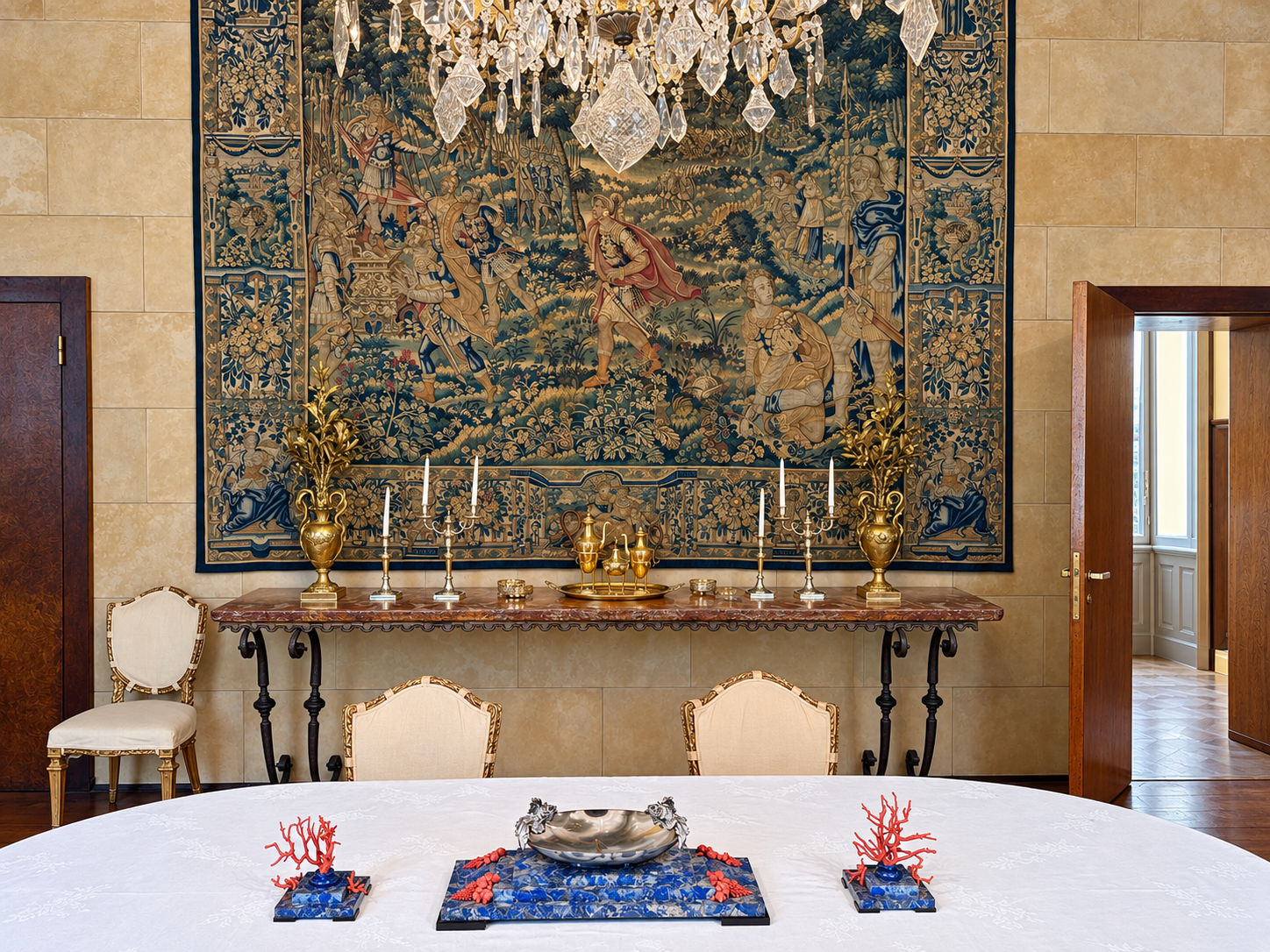
Guadagnino understood how much these rooms could convey. In I Am Love, the villa becomes an essential part of Tilda Swinton’s metamorphosis, embodying a world of Milanese bourgeois taste that is elegant, disciplined and tightly controlled. It later appeared in House of Gucci. But no film, however artful, can replicate the sensation of standing inside its sunlit rooms, seeing how their proportions change as you move through them or how a window draws your attention toward the garden.
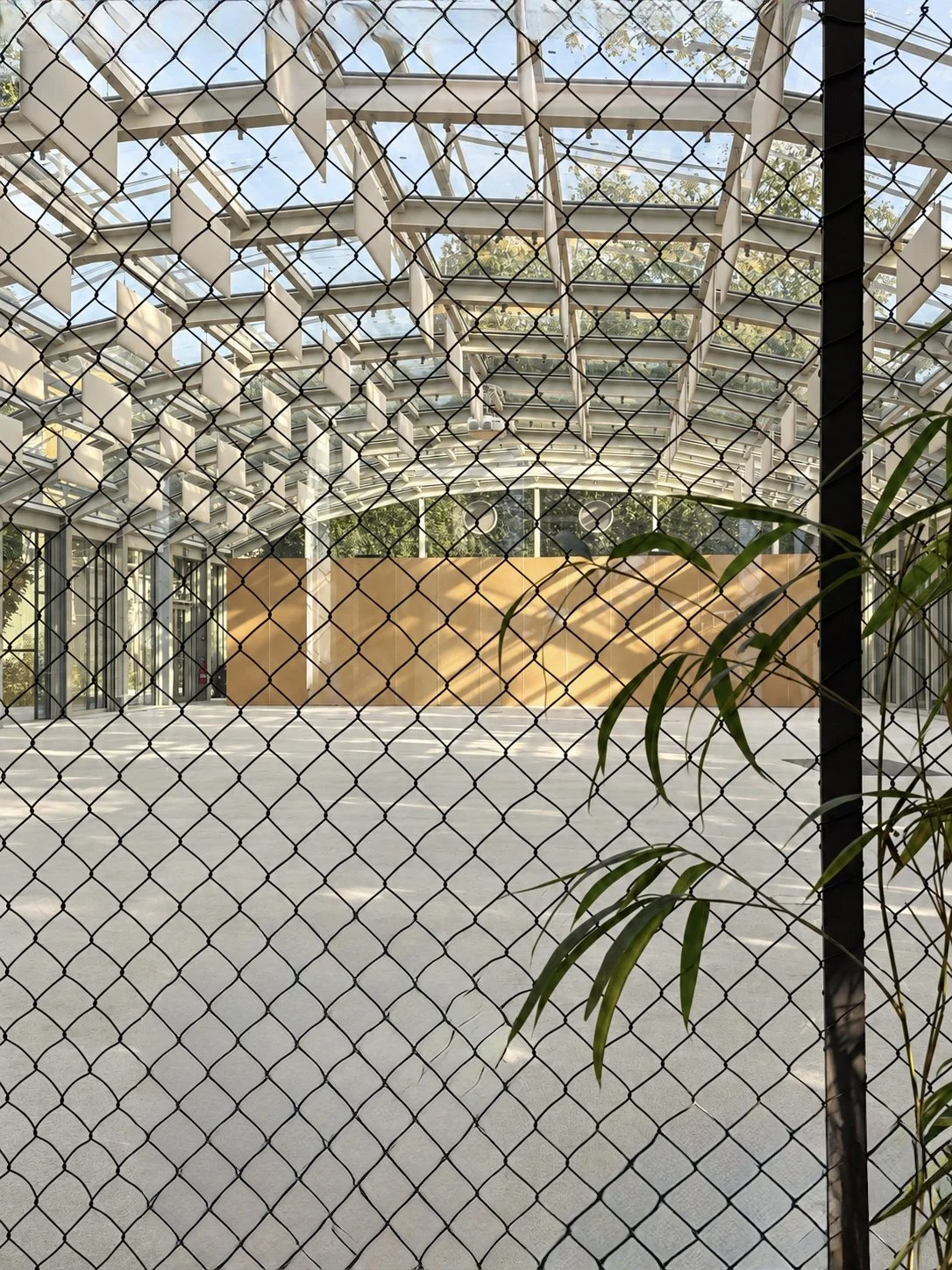
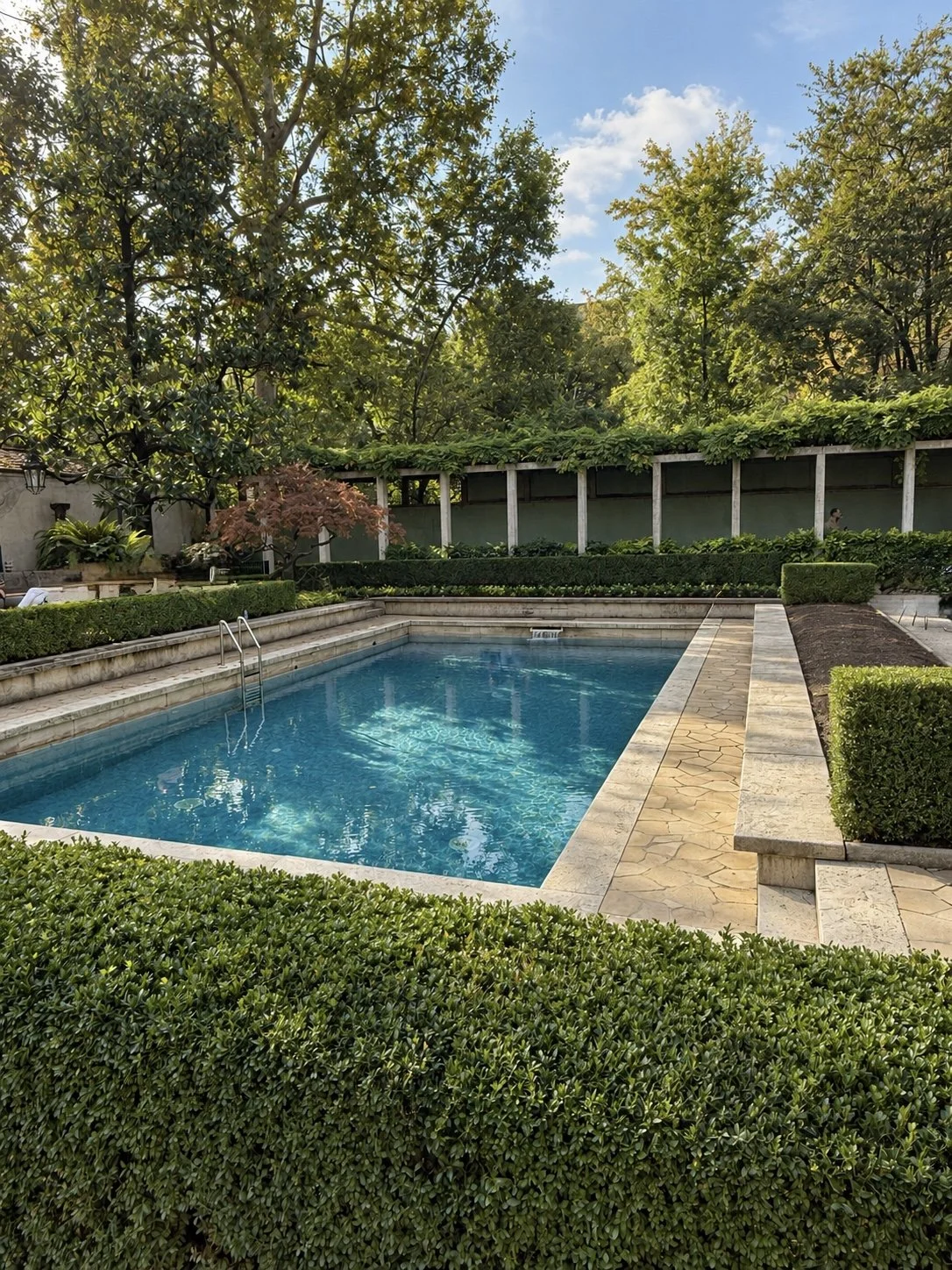
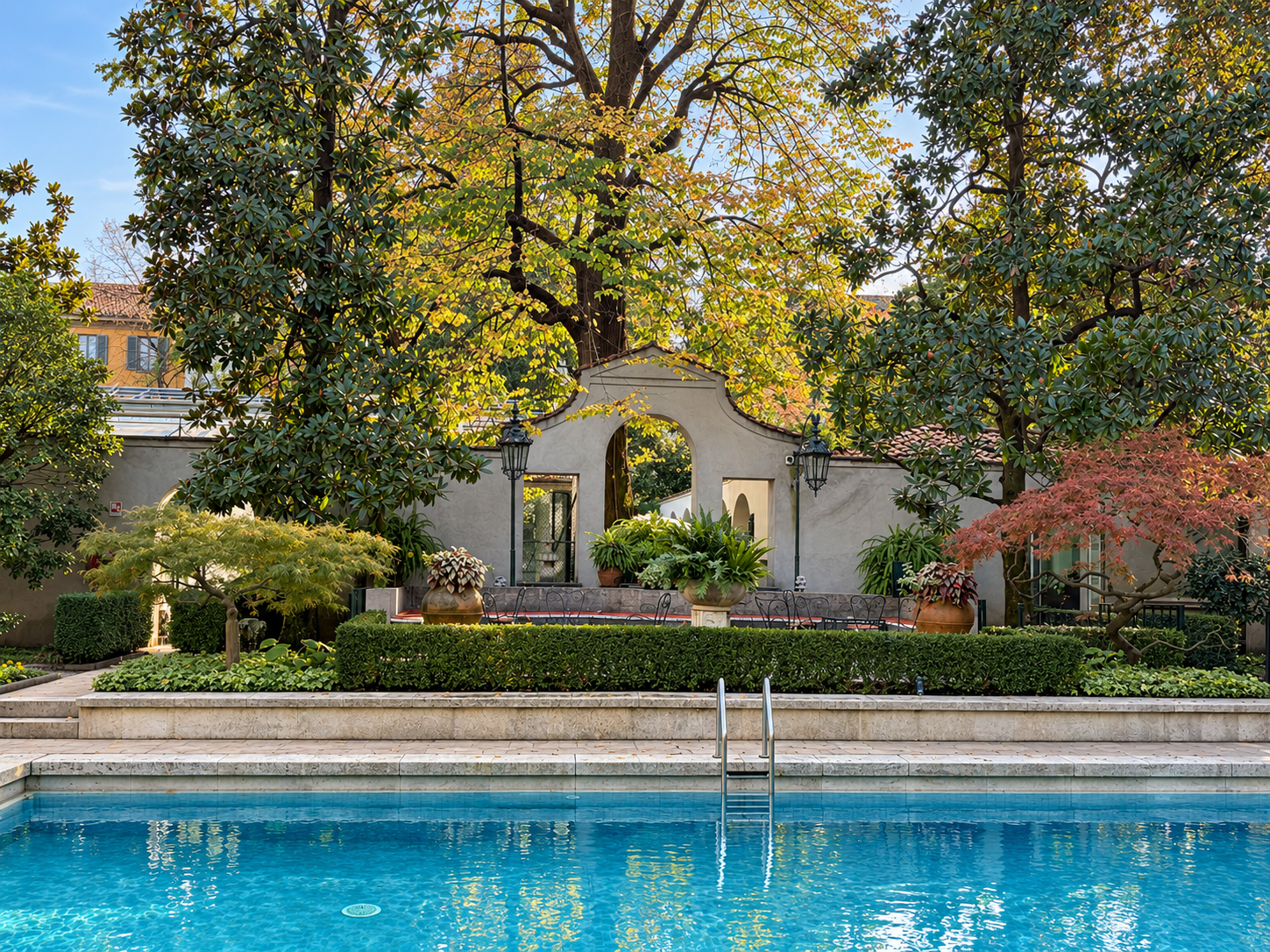
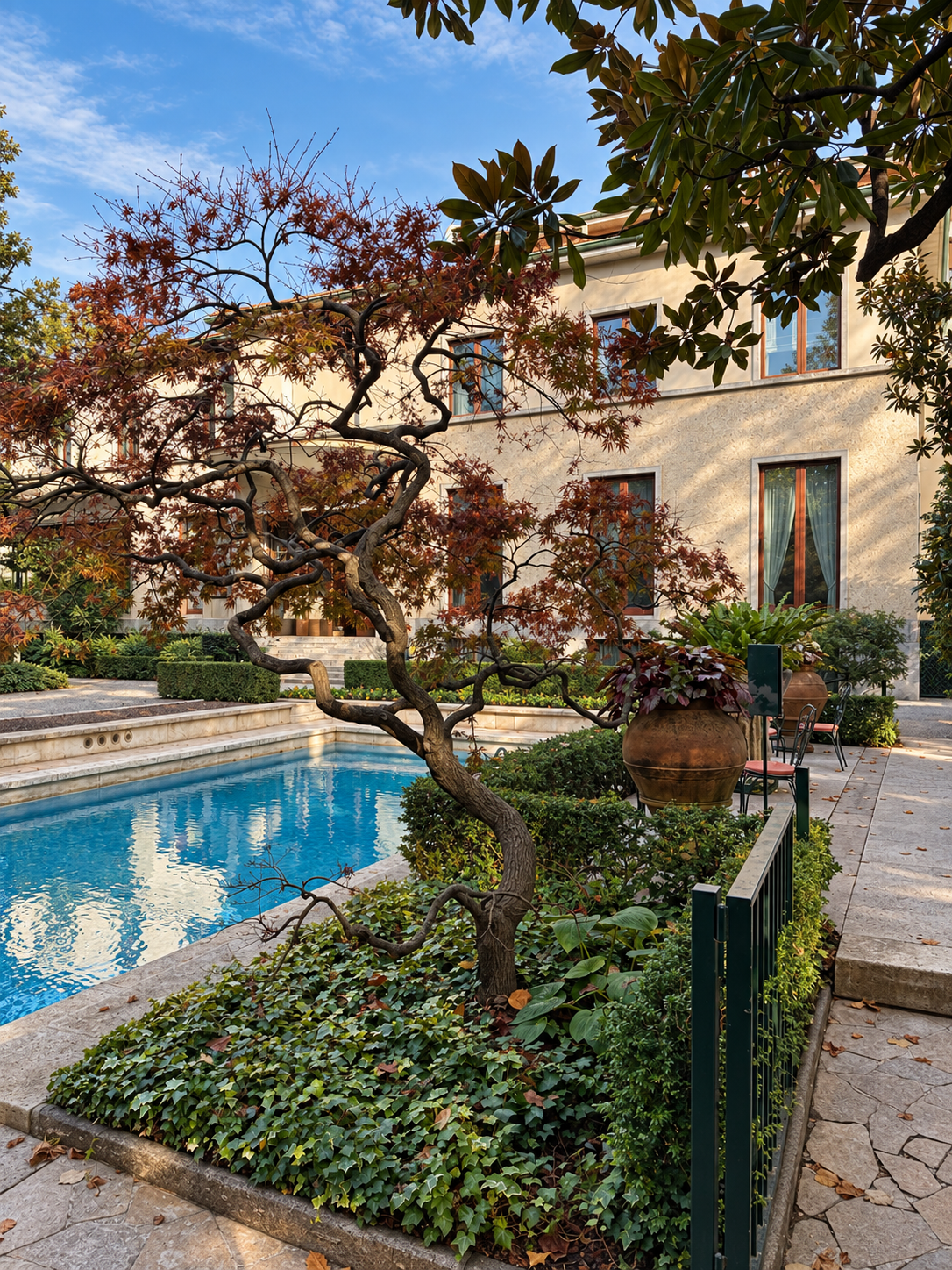
Outside, the experience unfolds into something even more serene. The villa is surrounded by a rare private garden in the heart of Milan, with its long, slender pool extending alongside the house. The former tennis court now sits beneath a pavilion of iron and glass, added in 2015 with support from Giorgio Armani. Its pale framework draws a precise geometry against the trees and sky.The water rippled in the cool autumn breeze as I sat nearby at the small café, enjoying a white wine and leisurely lunch. It was unexpectedly quiet. After moving through rooms so rich in detail, I was content for a while simply to sit.
Rested, I went back inside.
Today, Villa Necchi is open to the public under the care of Fondo per l’Ambiente Italiano (FAI), thanks to the generosity and foresight of the Necchi sisters. Its rooms now hold three important art collections, donated separately to FAI, each bringing another period and sensibility into the house.
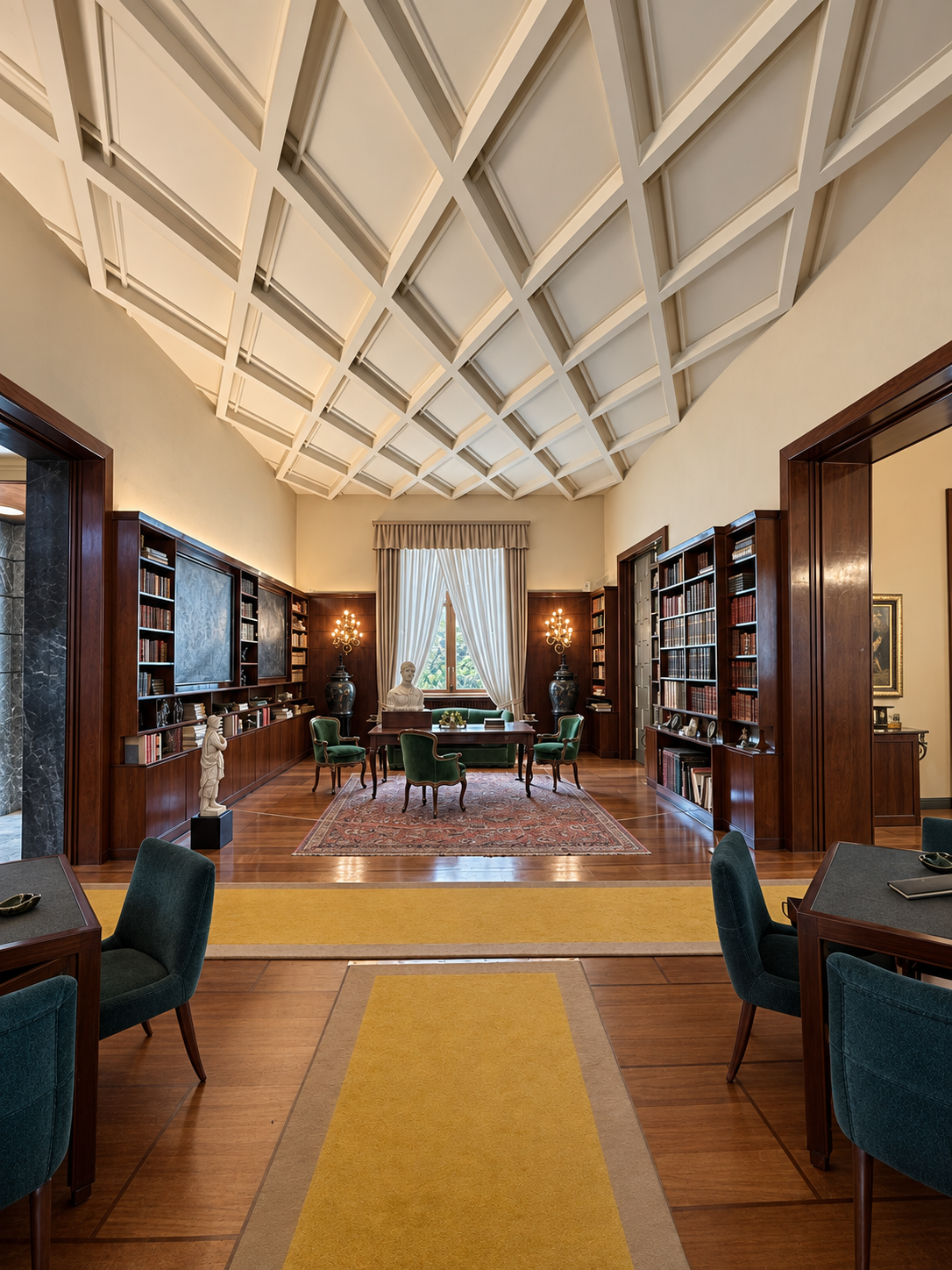
I lingered among the early 20th-century Italian works from the collection of gallerist and art historian Claudia Gian Ferrari. Morandi, De Chirico, Carrà and Wildt seemed entirely at home within Portaluppi’s architecture. There was pleasure in moving between the works and the rooms themselves, letting a painting draw my attention before noticing the doorway or the expanse of wall that held it.
As I continued through the house, a museum worker waved me into one of the guest bedrooms. There I discovered the intimate Guido Sforni Collection of works on paper by artists including Matisse, Picasso and Modigliani. The encounter felt like being shown something I might otherwise have missed.
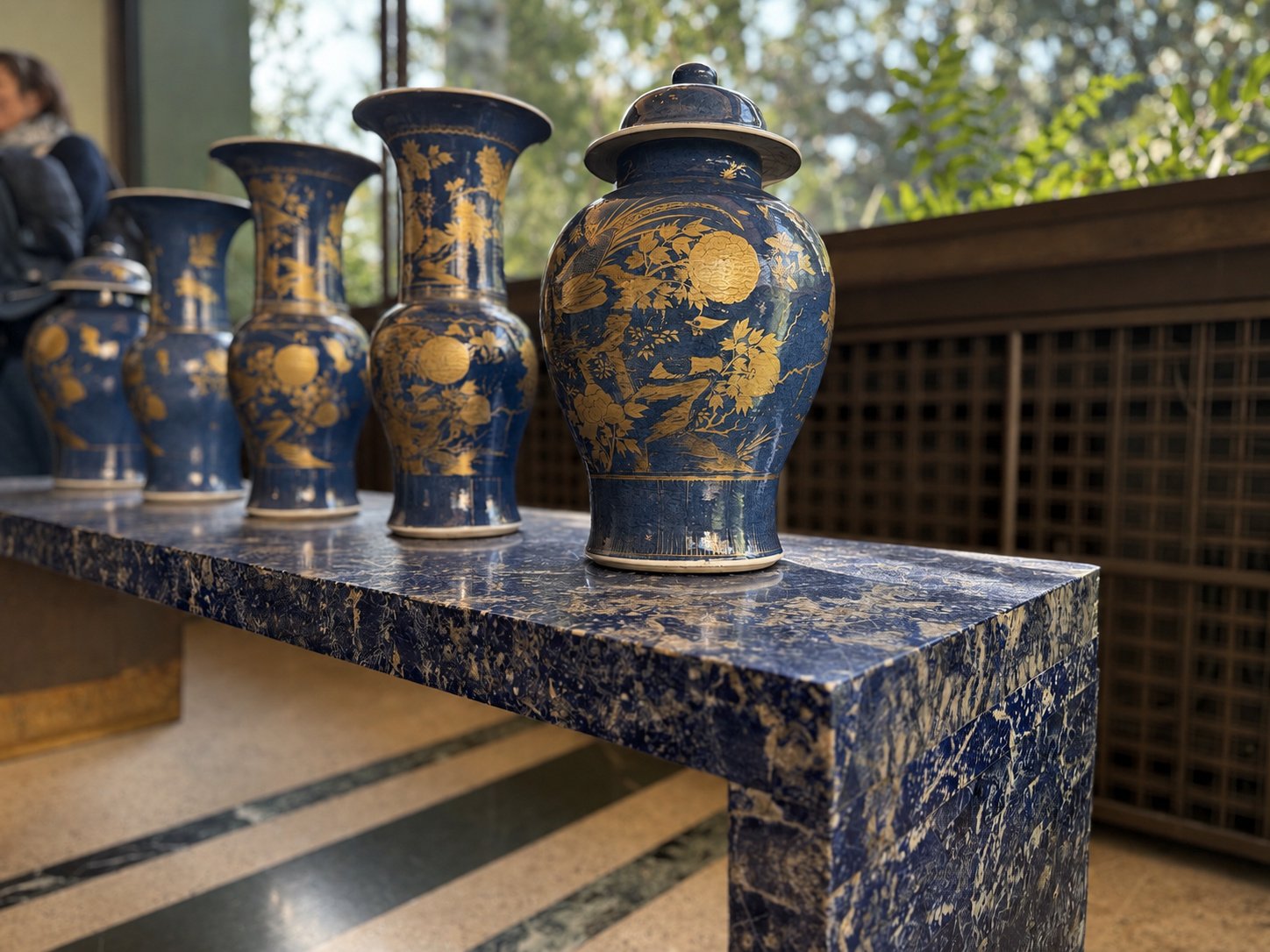
In the opulent Princess’s suite, the Alighiero and Emilietta de’ Micheli Collection unfolded in Rococo splendor. Canaletto’s luminous Veduta del Canal Grande verso occidente con la chiesa della Salute, pastel portraits by Rosalba Carriera, 18th-century French furniture and Chinese porcelain created an opulent counterpoint to the villa’s modernist bones.
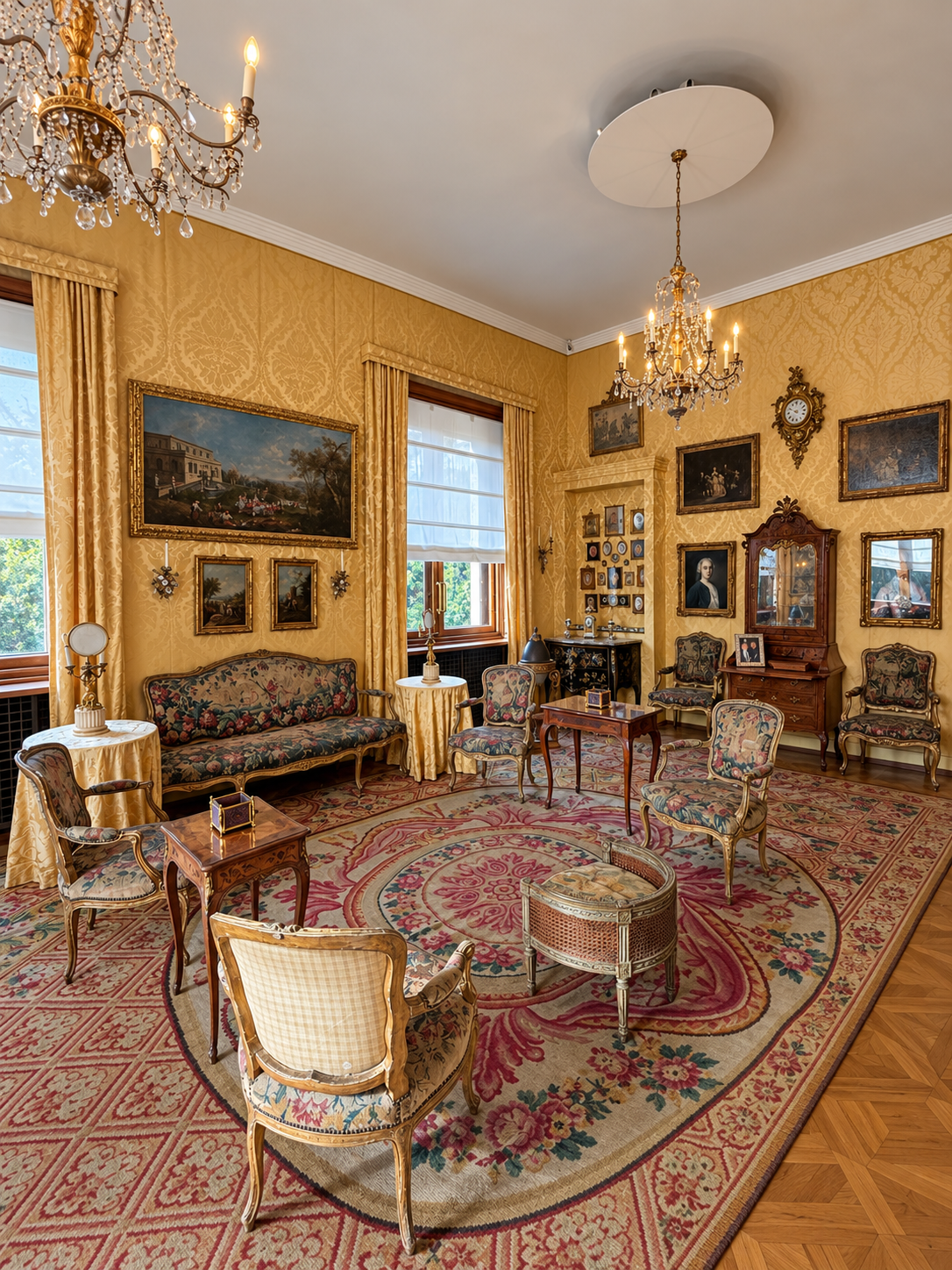
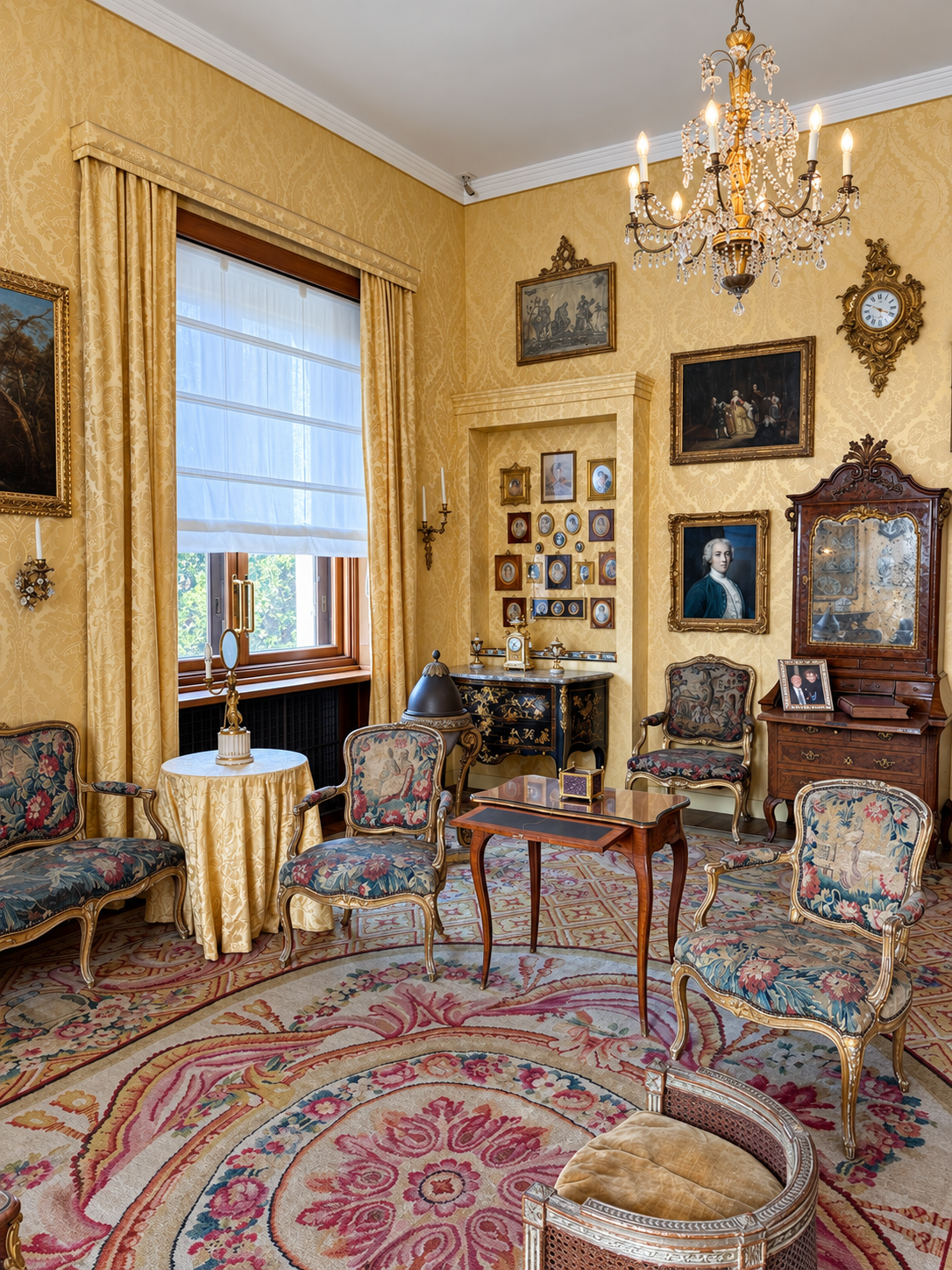
Although these collections arrived later, the house accommodates them with remarkable ease. Their presence extends the conversation between periods that began when the family introduced antiques into Portaluppi’s interiors. The architecture has enough conviction to make room for difference without sacrifice of its essential character.
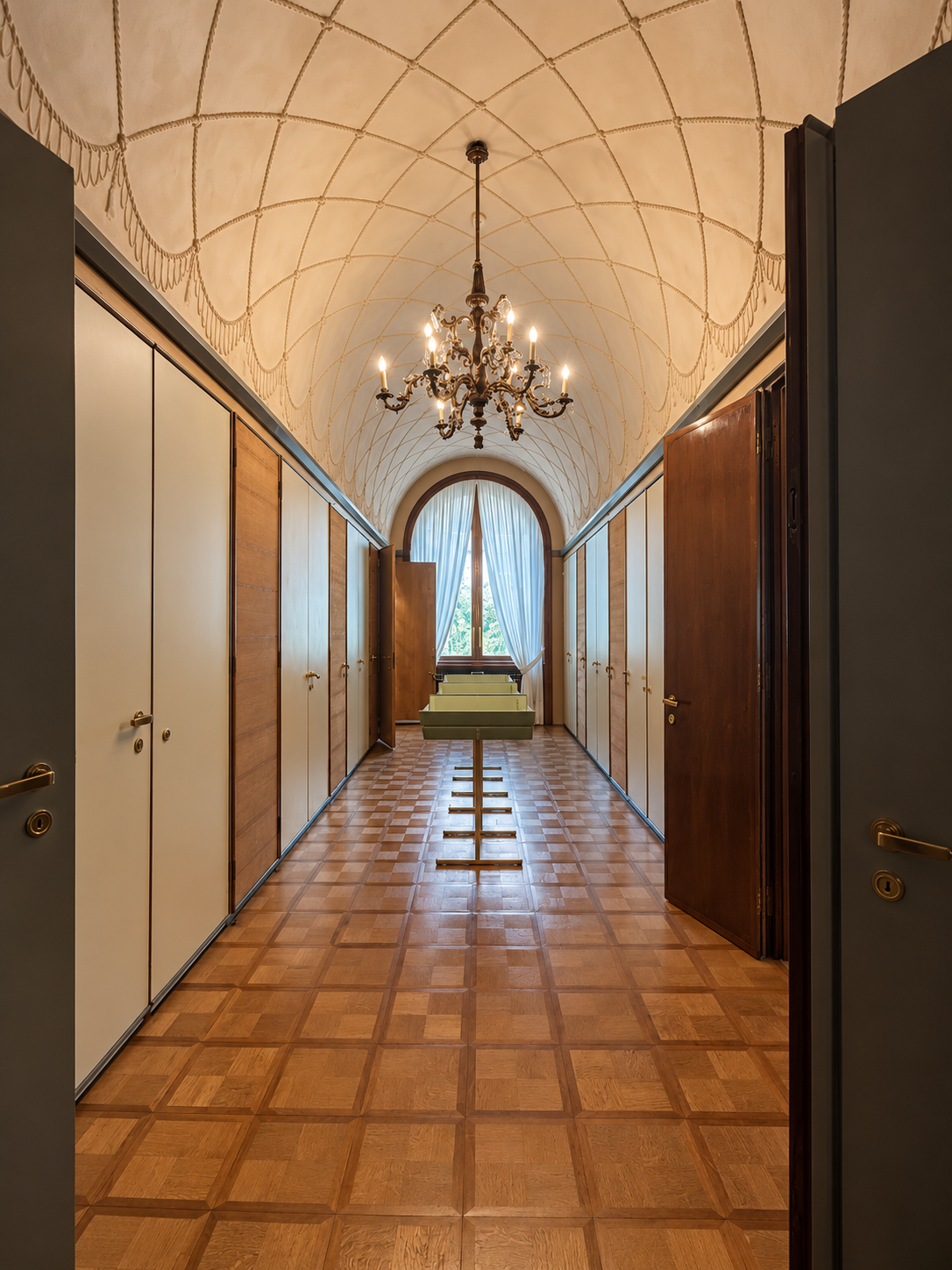
Nothing in the home was unconsidered, not even the corridors. Upstairs, a barrel-vaulted ceiling traced with an interlacing pattern spans a passage lined with doors to bedrooms, bathrooms and closets. Set into the wall panelling with discreet hardware, they allow the eye to travel uninterrupted toward the arched window beyond. It is a deft use of space, with storage and the other practical necessities of daily life given the same care as the rooms they serve.
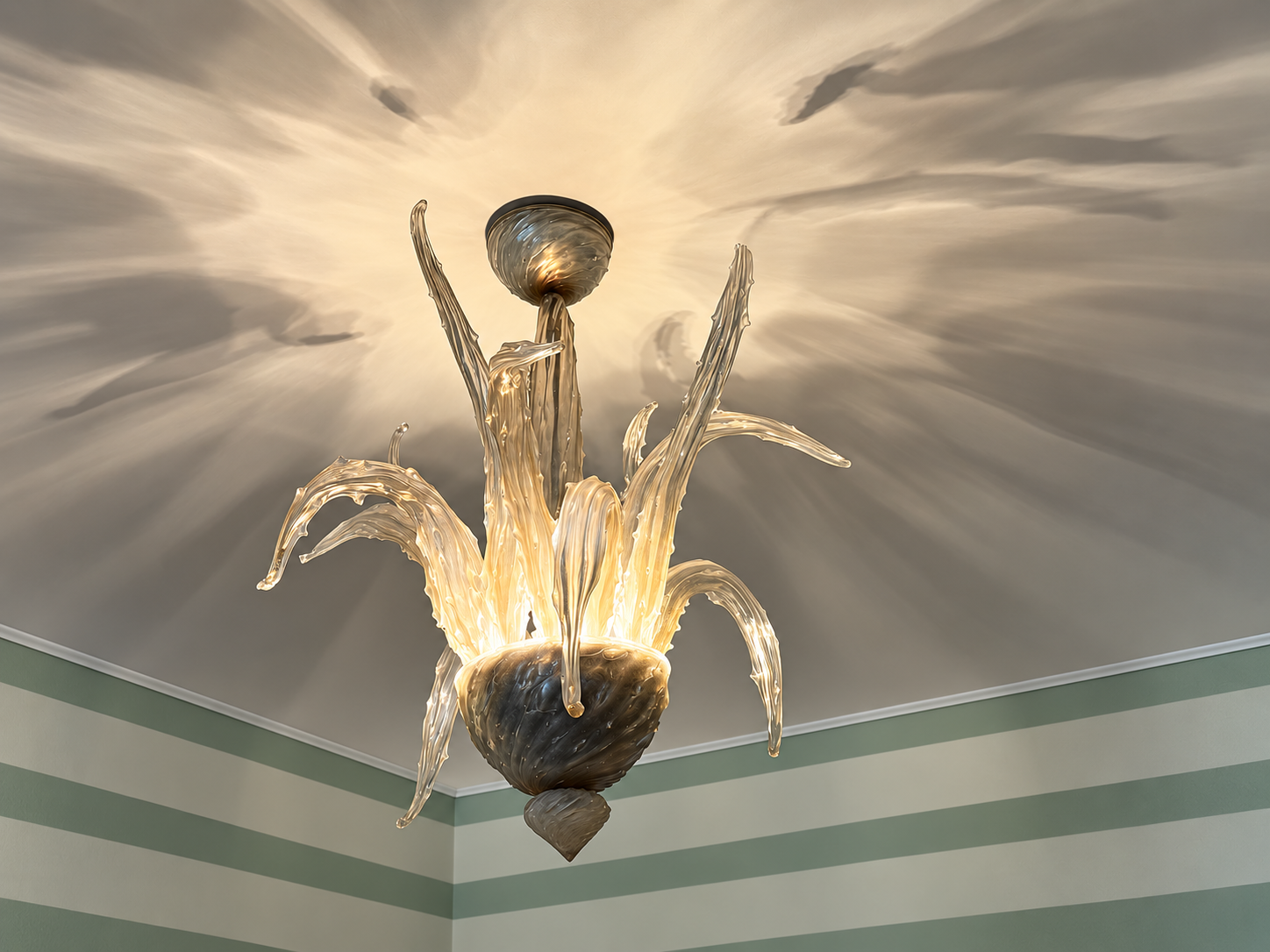
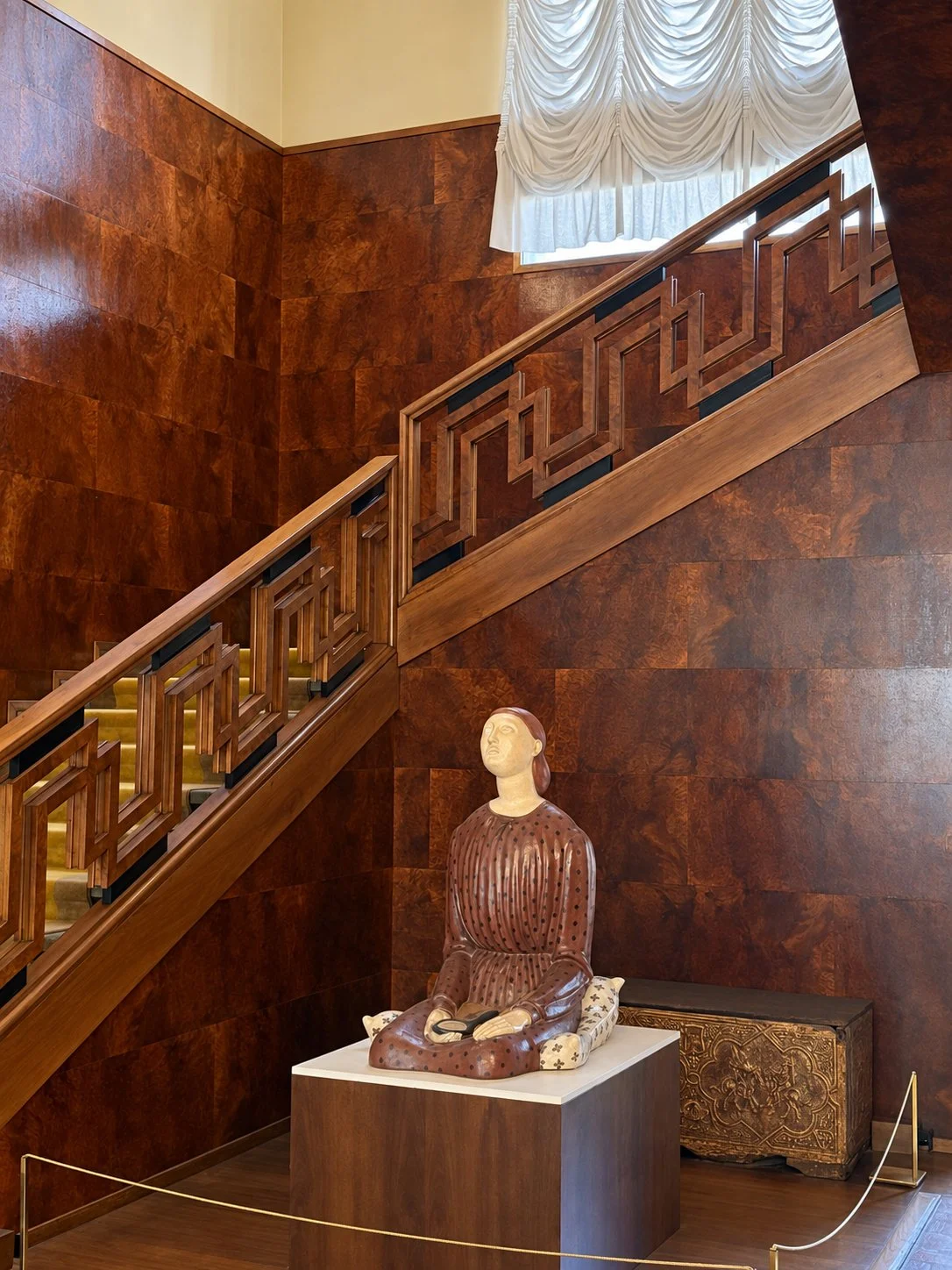
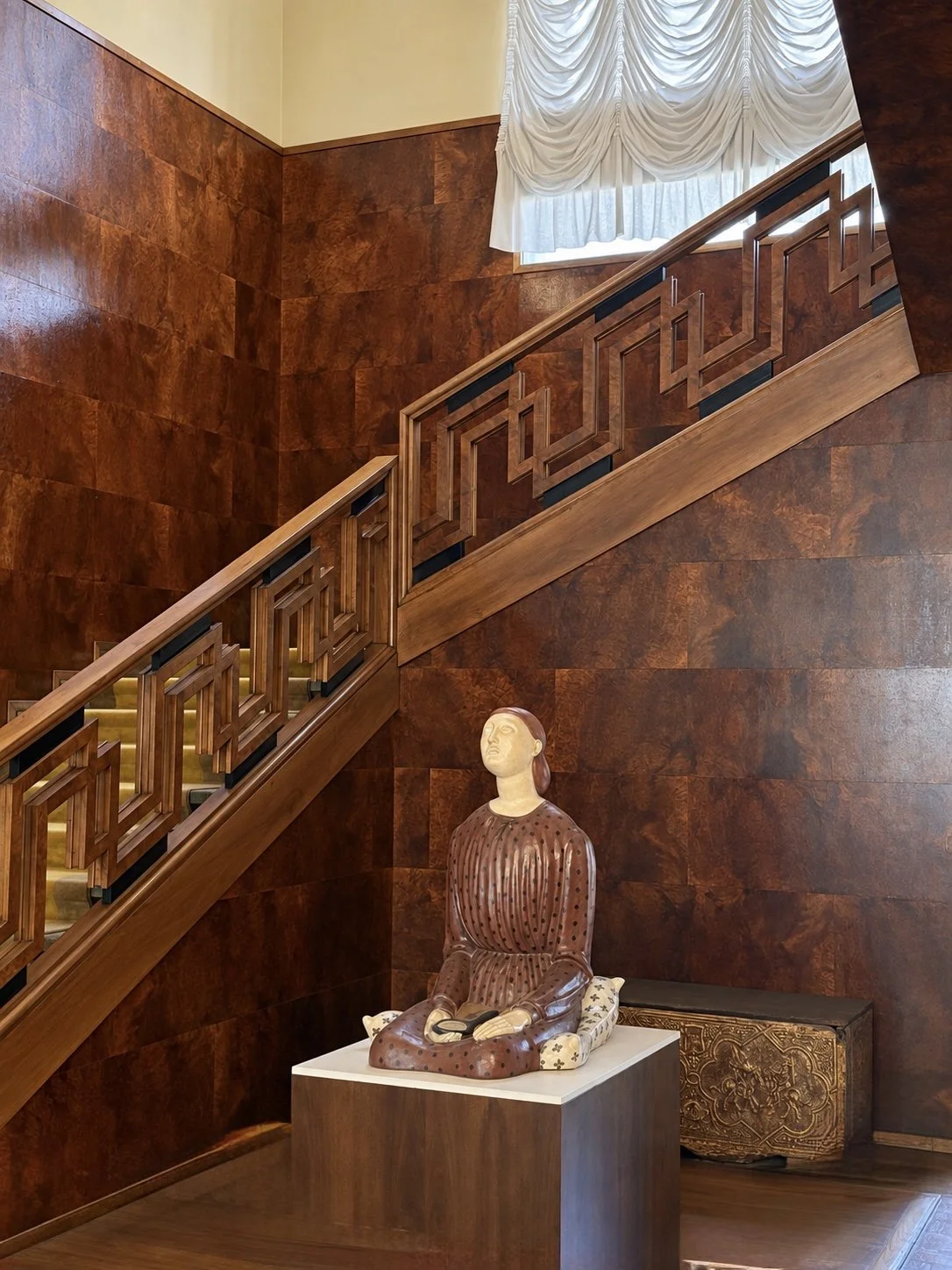
Sunlight falls across parquet floors. Every detail, from the curve of a banister to the geometry of a doorway, feels purposeful without pretension. Modern for its time and still remarkably current, it roots you in the present while gently drawing you into the past.
Long after I left, I remembered not only Portaluppi’s geometry, the luminous art or the stillness of the garden, but the strange intimacy of moving through its rooms. I never quite felt as though I were touring a museum. It was more like being invited into someone’s home while they were briefly away — as if a door might open, footsteps might sound and life inside the villa would simply resume.
At a Glance
Villa Necchi Campiglio is a 1930s house museum in Milan designed by architect Piero Portaluppi for the Necchi Campiglio family. Completed in 1935, it is known for its Italian Rationalist architecture, Art Deco influences, winter garden, early private swimming pool and important art collections. The villa appeared in I Am Love and House of Gucci and is open to the public through FAI.
Plan Your Visit
Via Mozart, 14
20122 Milano MI, Italy