SEASONAL SPOTLIGHT | ROMANESCO
Romanesco
Season: Peaks in fall and winter
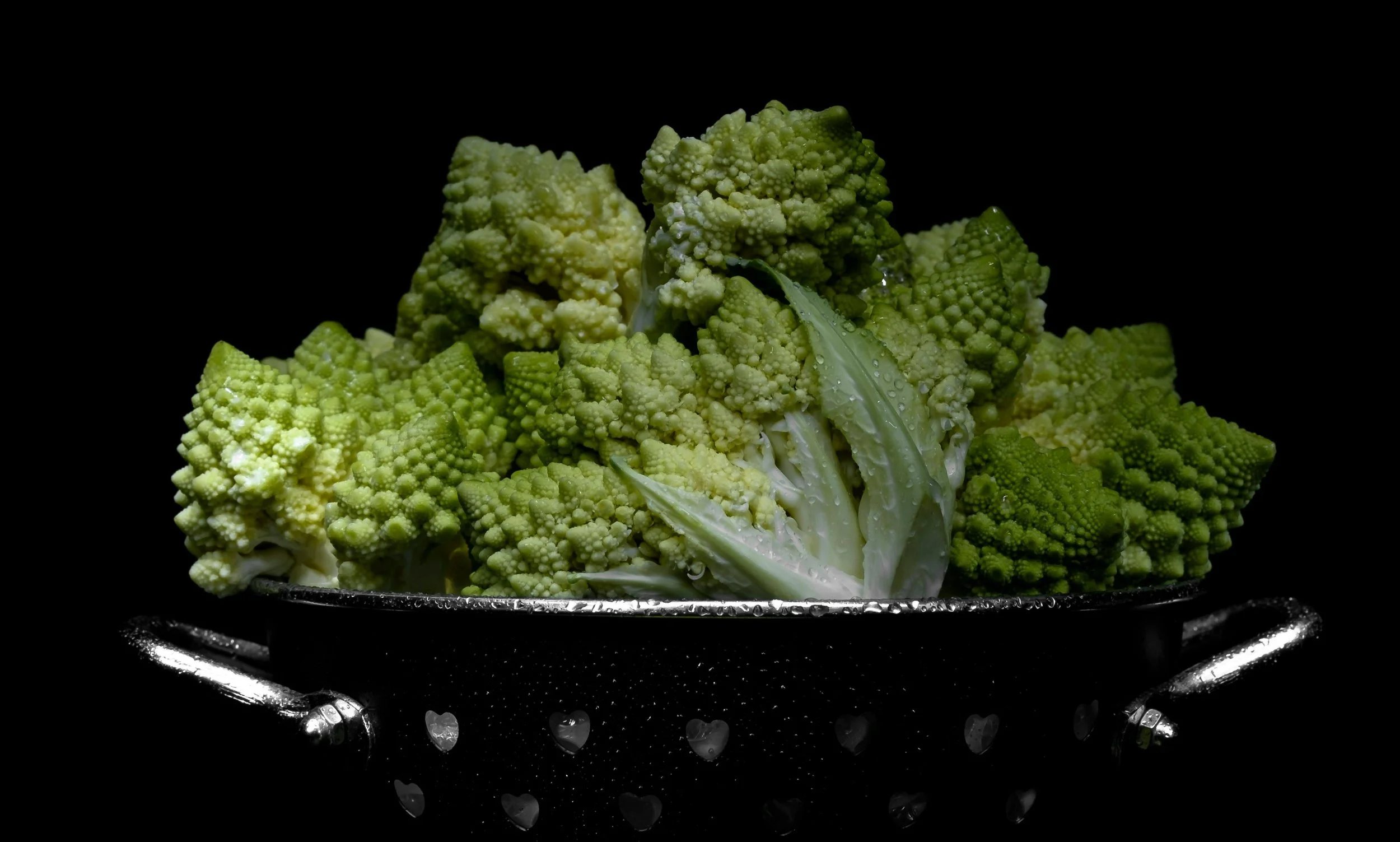
I love the architecture of romanesco. Its chartreuse florets rise in spirals, each tiny peak repeating the shape of the whole. On a fall vegetable platter, those intricate forms are especially striking beside the smooth surfaces of radishes, carrots and fennel. I like to build the platter around it, keeping the florets intact so you can appreciate their detail.
Alongside it, I serve bagna cauda, the warm Piedmontese sauce of anchovies, garlic and olive oil. It catches between the little branches, bringing a rich, savory warmth to each cool, crisp bite. This is one of my favorite ways to eat romanesco — raw, with its delicate nuttiness and firm texture, dipped into something wonderfully fragrant.
What Is Romanesco?
Romanesco is an Italian member of the brassica family, closely related to broccoli, cauliflower and cabbage. Often called broccolo romanesco or Roman cauliflower, it has long been associated with Rome and the surrounding countryside.
Its extraordinary shape follows a repeating geometric pattern: each pointed floret resembles a miniature version of the whole head. This is what gives romanesco its famous fractal appearance. The flavor is mild and delicately nutty, with a subtle sweetness and a firm texture that becomes tender when cooked.
When Is Romanesco in Season?
Romanesco’s main season is fall and winter. In many U.S. growing regions, October and November are particularly good months to look for it at farmers’ markets; milder climates can supply it through winter and into early spring. Timing varies with growing region and variety.
How to Prepare Romanesco
Rinse romanesco under cool running water, remove any tough outer leaves and trim the base. Separate it into florets by cutting through the stems, keeping the pointed crowns intact. The tender inner leaves and trimmed or peeled stems are edible, too.
On a crudité platter: Raw romanesco brings crunch, color and an extraordinary shape to an assortment of fall vegetables. Bagna cauda is my favorite accompaniment; an anchovy dressing or an herbed dip would also be lovely.
Roasted: The florets become tender, their tips brown and their mild flavor grows sweeter and nuttier. Salsa verde, lemon or an anchovy sauce makes a delicious companion.
In salads: Lightly steamed or blanched romanesco pairs well with capers, parsley and a mustard vinaigrette. Cannellini beans give the salad substance.
With pasta: Its florets sit beautifully among short shapes such as orecchiette or rigatoni. Garlic, chili, anchovies and crisp breadcrumbs are especially good partners.
However you prepare it, preserve a little bite and let those distinctive florets keep their shape.
How to Choose the Best Romanesco
Choose a firm, compact head that feels heavy for its size, with tightly packed florets and a fresh yellow-green to chartreuse color. Any attached leaves should look crisp and lively. Avoid heads with soft patches, extensive browning, mold or a strong, unpleasant smell. The delicate tips should be largely intact.
How to Store Romanesco
Keep romanesco whole and unwashed in a loosely closed or perforated bag in the refrigerator’s vegetable drawer. Use it within three to five days for the best flavor and texture; a very fresh head may keep for about a week. Wash just before preparing it, and keep the florets dry during storage.