Saffron Pasta with Zucchini Blossoms and Burrata
SERVES: 4-6
This pasta began with a refrigerator full of beautiful zucchini blossoms and the realization that we simply could not eat another one stuffed with cheese and fried. As much as I love them that way, there comes a point when self-preservation has to enter the conversation.
I still wanted to do the blossoms justice. So delicate, both in texture and flavor, it seemed a shame to pair them with anything that would overpower them. So I started with what I had in the pantry and worked from there, keeping the flowers at the center of everything. Plain pasta didn’t feel quite enough, but saffron did. It brings warmth, fragrance and that extraordinary golden color while still allowing the blossoms to taste like themselves.
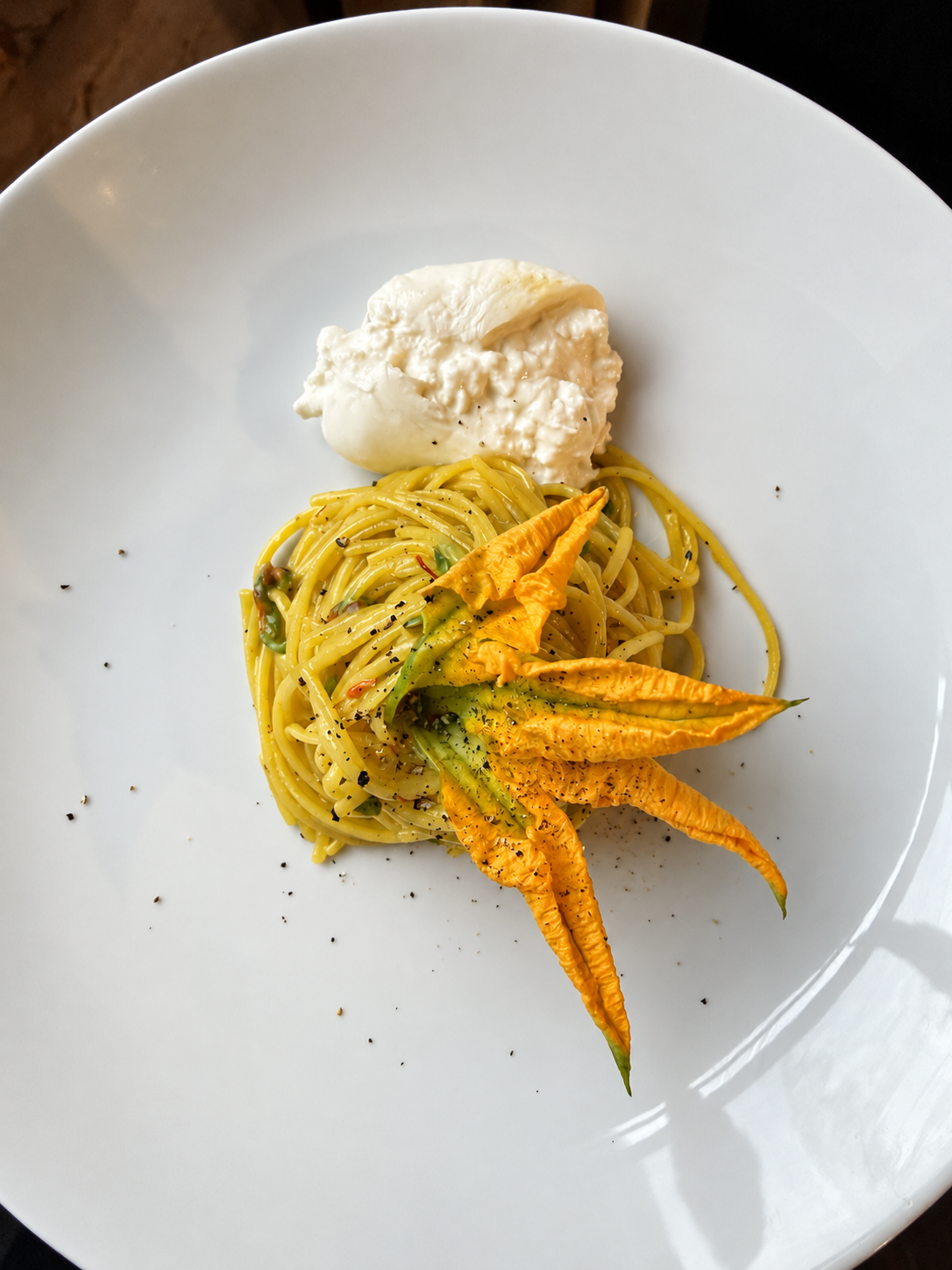
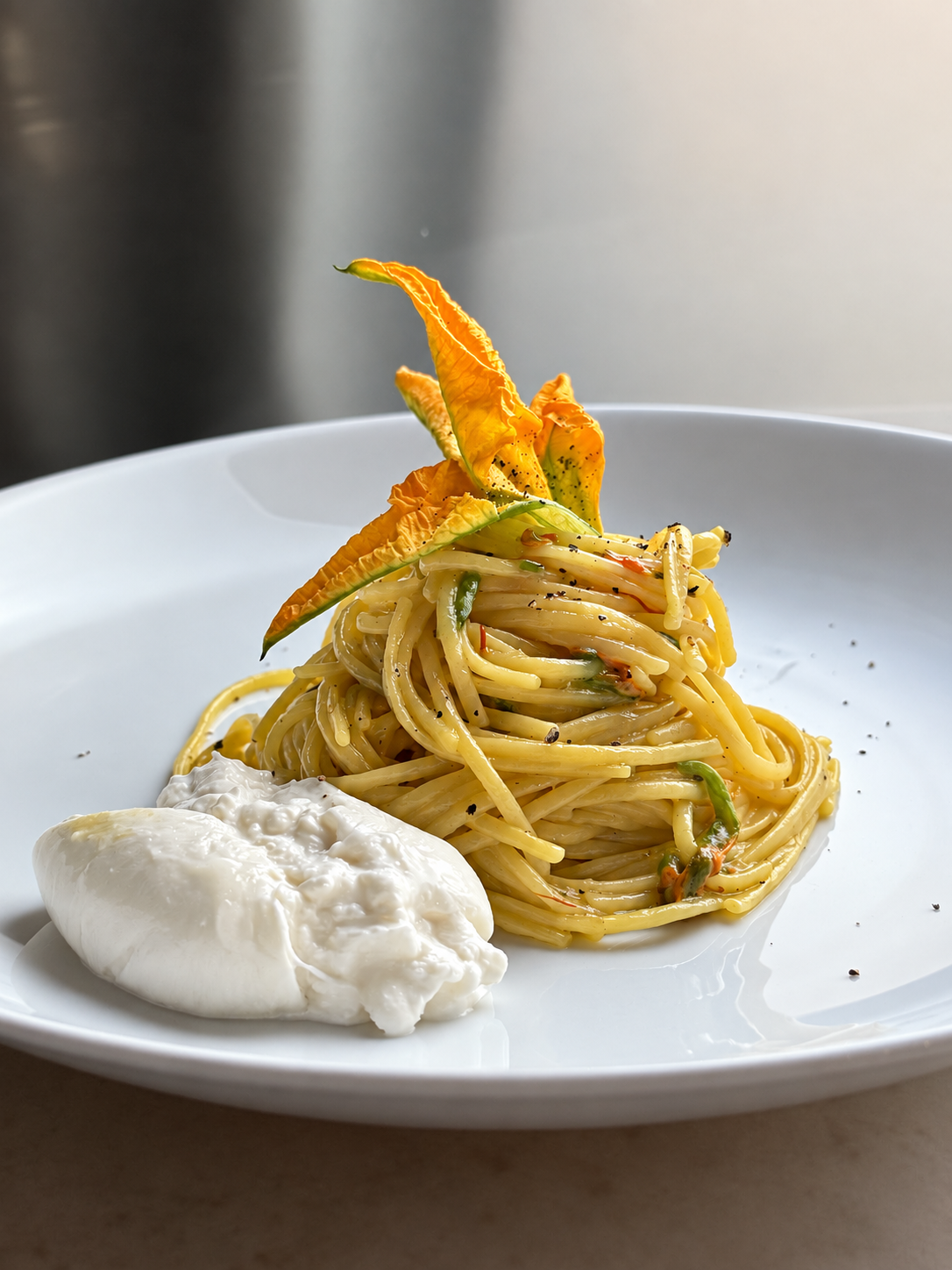
Even the tender stems went into the pan, sautéed briefly with a crushed clove of garlic to bring a little more of that vegetal zucchini flavor into the dish. The garlic comes out, the blossoms go in only at the end and fresh lemon zest brings brightness without tipping the pasta toward citrus. Burrata, torn onto the plate, catches the hot saffron-coated strands in creamy little pockets.
What started as an improvisation turned into one of those dishes that looks far more elaborate than it is. The flavors are subtle but distinct, the colors are gorgeous and somehow each forkful makes you want the next.
And best of all, it gives the zucchini blossoms — and my waistline — a welcome break from the fryer.
INGREDIENTS
1 pound linguine or spaghetti
18 large zucchini blossoms (squash blossoms), or approximately 20–25 smaller blossoms
Tender stems from the blossoms, if attached
1 garlic clove, lightly crushed
2 generous pinches saffron threads, approximately 1/2 teaspoon loosely packed
4 tablespoons unsalted butter, divided
2 tablespoons extra-virgin olive oil, plus more for finishing
1 to 1 1/4 cups finely grated Parmigiano-Reggiano
8 ounces burrata
Finely grated zest of about 1/2 large lemon
Freshly ground black pepper
Kosher salt
1/2 cup starchy pasta water, for blooming the saffron
2 cups additional starchy pasta water, reserved for finishing the pasta
METHOD
Prepare the Blossoms
Gently open each blossom and remove the stamen or pistil from the center. Remove any particularly tough or spiky green sepals around the base. Trim away the dry ends of the stems and thinly slice any that are tender and green. Discard stems that feel thick, woody or fibrous.
Choose 4 or 5 of the prettiest blossoms and reserve them for finishing. Tear the remaining blossoms lengthwise into broad ribbons. Tear the reserved blossoms in halves or large pieces so they retain their shape.
Cook the Pasta and Bloom the Saffron
Bring a large pot of well-salted water to a boil. Add the pasta.
After the pasta has cooked for about 3 to 4 minutes, when the cooking water has become cloudy and starchy, ladle 1/2 cup of the pasta water into a small bowl containing the saffron threads. Let the saffron bloom in the hot water for 8 to 10 minutes. Do not strain it; both the golden liquid and softened threads will go into the pasta.
Continue cooking the pasta until about 2 to 3 minutes shy of al dente.
Before draining the pasta, reserve an additional 2 cups of the starchy cooking water for finishing the sauce.
For the Sauce
While the saffron blooms and the pasta continues to cook, melt 2 tablespoons of the butter with the olive oil in a large skillet or sauté pan over low to medium-low heat.
Add the crushed garlic clove and sliced blossom stems. Gently sauté for 1 to 2 minutes, allowing the garlic to lightly perfume the butter and oil without browning. Remove and discard the garlic.
Finish the Pasta
Transfer the drained pasta to the skillet when it is about 2 to 3 minutes shy of al dente. Immediately pour the saffron infusion over the pasta, threads and all, and toss well.
Continue cooking over medium-low heat, tossing frequently, as the pasta finishes cooking in the saffron-infused water. As the liquid is absorbed, add the reserved pasta water about 1/4 cup at a time as needed, allowing the pasta, butter, olive oil and starchy water to come together into a glossy sauce.
When the pasta is nearly al dente, add the torn zucchini blossoms and toss gently for 30 to 45 seconds, just until they begin to soften. The blossoms should retain their color and delicate texture rather than disappearing into the sauce. Remove the skillet from the heat.
Add the remaining 2 tablespoons butter and toss until melted. Gradually add the Parmigiano-Reggiano, continuing to toss and adding reserved pasta water as needed until the sauce is silky and coats the strands. The Parmigiano will tighten the sauce, so continue adding pasta water until the consistency is slightly looser than you think it needs to be.
Add the lemon zest and freshly ground black pepper. Toss again, then taste and adjust the salt only after adding the Parmigiano.
To serve
Tear the burrata into pieces and scatter it across a large serving platter or individual plates. Season lightly with salt and a few drops of extra-virgin olive oil.
Pile the hot saffron pasta over and around the burrata rather than stirring the cheese directly into the sauce. Gently fold some of the reserved blossom pieces through the pasta, allowing them to soften from the residual heat, then arrange the remaining blossoms over the top just before serving.
Finish with freshly ground black pepper, a sprinkle of lemon zest and drizzle of extra-virgin olive oil, if desired.
Serve immediately.
Buon Appetito!
KITCHEN NOTES
About the Stems: The tender green stems are worth keeping. They have more pronounced zucchini flavor than the blossoms themselves and give the pasta another subtle vegetal note. Not every stem will be tender, though. Thick or fibrous ones can simply be discarded.
Getting the Sauce Right: There isn’t a traditional sauce here. The starchy pasta water, butter and Parmigiano create one as the pasta is tossed. The finished pasta should be glossy and fluid rather than tight or buttery. It will continue to absorb liquid as it sits, so a slightly looser sauce in the pan is exactly what you want.
The Burrata: I like the burrata torn onto the platter rather than incorporated into the pasta. That way it remains its own element: some bites are saffron, Parmigiano and blossoms, while others pick up a cool, creamy piece of burrata. Stirring it into the pan changes both the texture and the delicacy of the dish.
Drink Pairing: A crisp Italian white with good acidity and some minerality is a natural match here. Verdicchio would be my first choice: fresh enough for the blossoms and lemon, but with enough texture to stand up to the butter, Parmigiano and burrata. A dry Etna Bianco would also be lovely, particularly with the saffron.
Serving Suggestion: I wouldn’t put much else on the plate. The pasta has enough going on already. If you’re making it for dinner, start with something simple and crisp — perhaps shaved fennel dressed with lemon and olive oil or a plate of good prosciutto — then let the pasta be the main event. If you want something afterward, ripe summer fruit would make more sense to me than a heavy dessert.
SHOP THE STORY