SEASONAL SPOTLIGHT | PEACHES
Peaches
Peak Season: midsummer through early September
I have always loved peaches, along with almost anything peach-flavored. I first encountered a white peach while I was living in Italy; until then, the only peaches I had seen in the United States were yellow. I remember biting into its pale flesh and being completely taken by its delicate, floral flavor. The juice ran down my fingers, and I had the distinct feeling that, despite eating peaches all my life, I had never really tasted one before.
My birthday falls in late summer, when peaches are still abundant in Italy. For one of my birthdays while living there, my friends threw me a party. We spent the evening grilling and drinking Lambrusco, slipping slices of peach into our glasses and letting the fruit sweeten the wine as we drank. By the end of the meal, the peaches had absorbed the Lambrusco, their pale flesh stained ruby, lush with juice and just a little boozy. We ate them for dessert, a simple and rather perfect end to the evening.
I have paid closer attention to peaches ever since. I remain partial to white peaches, although the tangier yellow varieties have their own appeal. The season is not long, and a peach can move from stubbornly hard to overripe with remarkable speed, so choosing well matters. A bad peach is a particular waste of summer.
What Are Peaches?
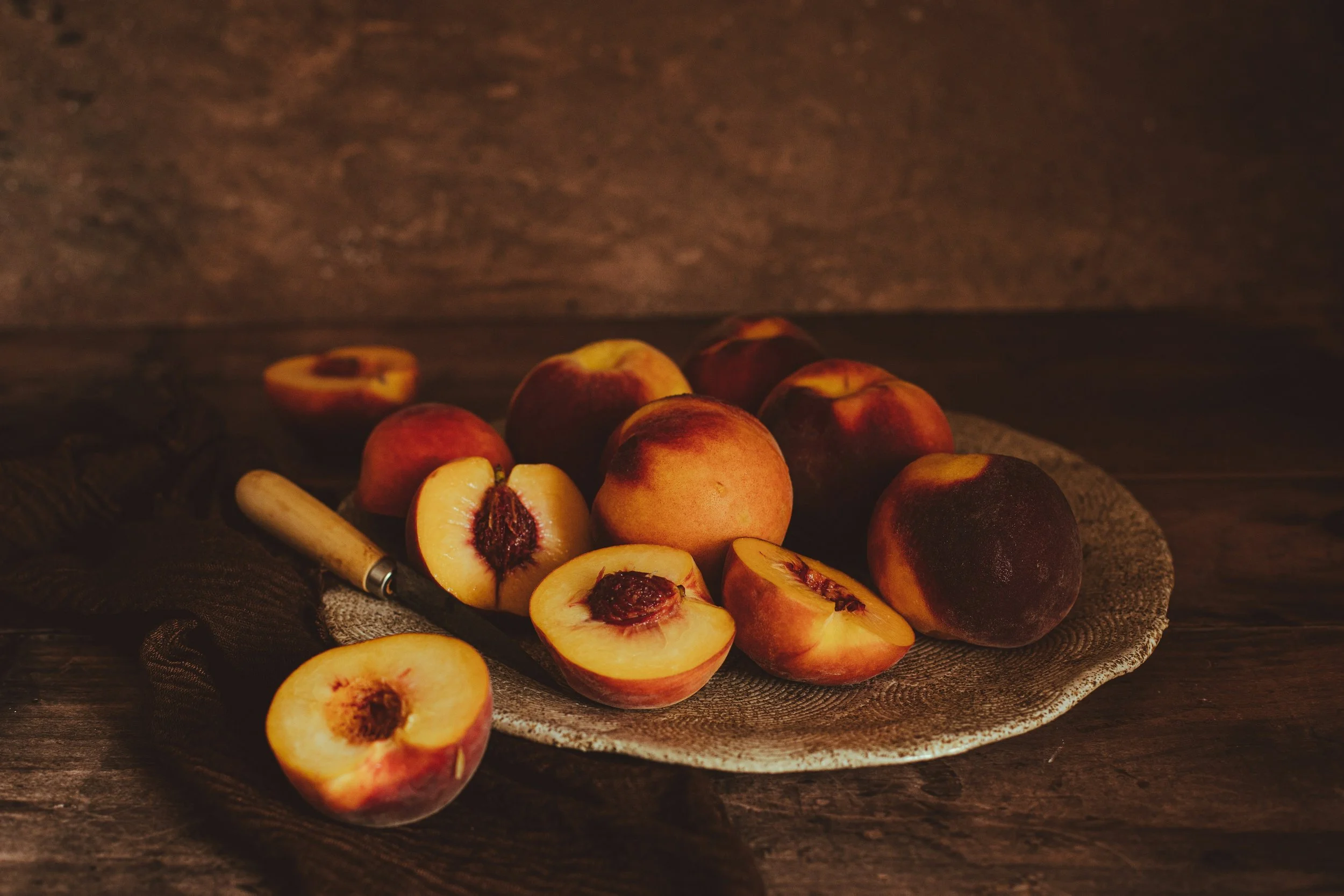
Peaches are stone fruits and members of the rose family, along with cherries, plums, apricots and almonds. Nectarines are botanically the same fruit; a natural genetic variation accounts for their smooth skin rather than the peach’s familiar fuzz.
The terms used to describe peaches refer to three different qualities: the color of the flesh, how it attaches to the pit and the shape of the fruit.
Yellow peaches have a pronounced sweet-tart flavor and enough acidity to stand up well to cooking. White peaches are generally sweeter, more floral and lower in acid.
Clingstone peaches hold tightly to their pits, while the flesh of a freestone peach separates cleanly from the stone. Semi-freestone varieties fall somewhere between the two. Freestone peaches are especially convenient when neat slices or halves are needed for salads, pies and other recipes.
Most peaches are round, but flat peaches, also known as doughnut or Saturn peaches, have a distinctive squat shape and a smaller pit. They are often prized for their fragrance and concentrated sweetness and may be either white- or yellow-fleshed.
Hundreds of individual peach cultivars are grown, although their names are not always included at the market. The broader distinctions between white and yellow, clingstone and freestone and round and flat are usually more useful when deciding what to buy.
When Are Peaches in Season?
In the United States, peach season begins in late spring in warmer growing regions and continues into September farther north. July and August generally bring the widest selection, with beautiful late-season fruit still available in early September.
Peaches continue to ripen after they are picked, but only if they were sufficiently mature when harvested. A good peach may need another day or two to soften and become fragrant at home. One picked while still very green may soften without ever developing much flavor.
Locally grown peaches are worth seeking out when possible. Because they travel a shorter distance, they can often remain on the tree longer and be harvested closer to ripeness.
How to Prepare And Use Peaches
Rinse peaches gently under cool water just before using them. The skin is entirely edible and contributes color, texture and a pleasant tartness, so there is no need to remove it unless a recipe specifically calls for peeled fruit.
To halve a freestone peach, run a knife around its natural seam, twist the two halves in opposite directions and lift out the pit. With clingstone varieties, it is usually easier to cut the flesh away from the stone in sections.
When peaches are perfectly ripe, they are particularly good in raw preparations, including salads. They can also be grilled, roasted, poached or baked and used in both sweet and savory dishes.
To peel peaches, score a shallow “X” at the base of each fruit. Lower them into boiling water for approximately 30 seconds, then transfer them immediately to an ice bath. Once cool enough to handle, the skins should slip away easily.
If cut peaches will not be served immediately, toss them with a little lemon juice to slow browning.
How to Choose the Best Peaches
Begin with fragrance. A ripe peach should smell unmistakably of peach, particularly near the stem. If it has no scent at all, it is unlikely to offer much flavor.
Look for a warm golden or creamy background color without green around the stem. The amount of red or pink blush is determined primarily by the fruit’s exposure to sunlight and is not a reliable measure of ripeness.
A peach that is ready to eat should feel heavy for its size and yield slightly when gently pressed near the shoulder. Use the palm of your hand rather than your fingertips, which can easily bruise the fruit.
Avoid peaches with deep bruises, split skin or pronounced wrinkles. A firm peach can finish ripening at home, provided it has a developed color and some fragrance. A peach that is rock-hard, green and entirely scentless was probably picked too early.
How to Store Peaches
Keep firm peaches at room temperature in a single layer, with the stem side facing down. Do not stack them, as their delicate flesh bruises easily.
To hasten ripening, place the peaches in a loosely closed paper bag. Adding an apple or banana will speed the process further. Check them daily, since the distance between ripe and overripe can be surprisingly short.
Once ripe, peaches may be refrigerated for approximately three to five days. Allow them to return to room temperature before serving so their flavor and fragrance are not muted by the cold.
Store cut peaches in an airtight container in the refrigerator and use them within two days. For longer storage, slice the fruit, freeze the pieces in a single layer and then transfer them to a freezer-safe container.